SOFT-GOODS DESIGN • PRODUCT DEVELOPMENT • INDUSTRIAL DESIGN
P235 TECH GEAR BAG & ONBOARD SURGE PROTECTOR
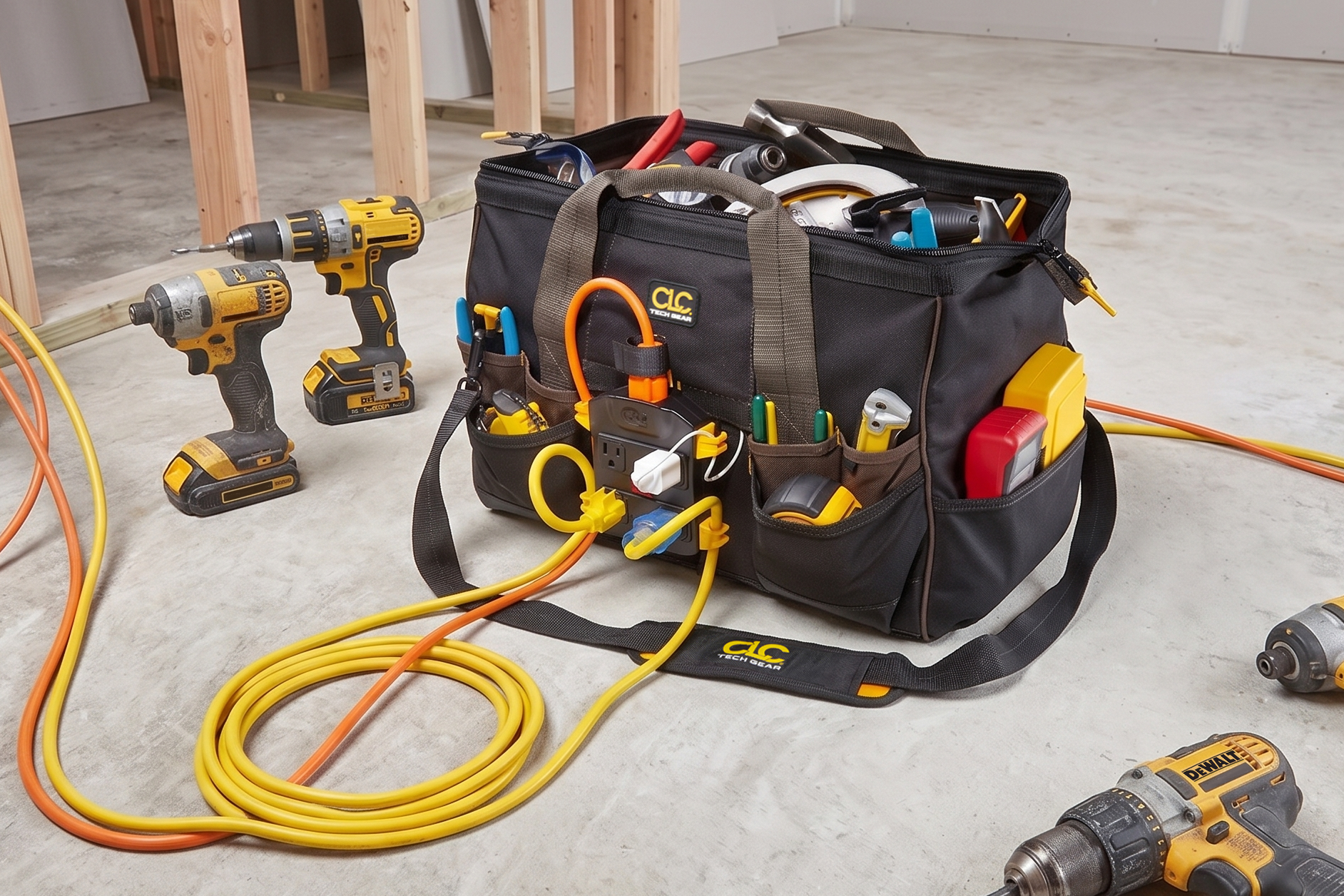
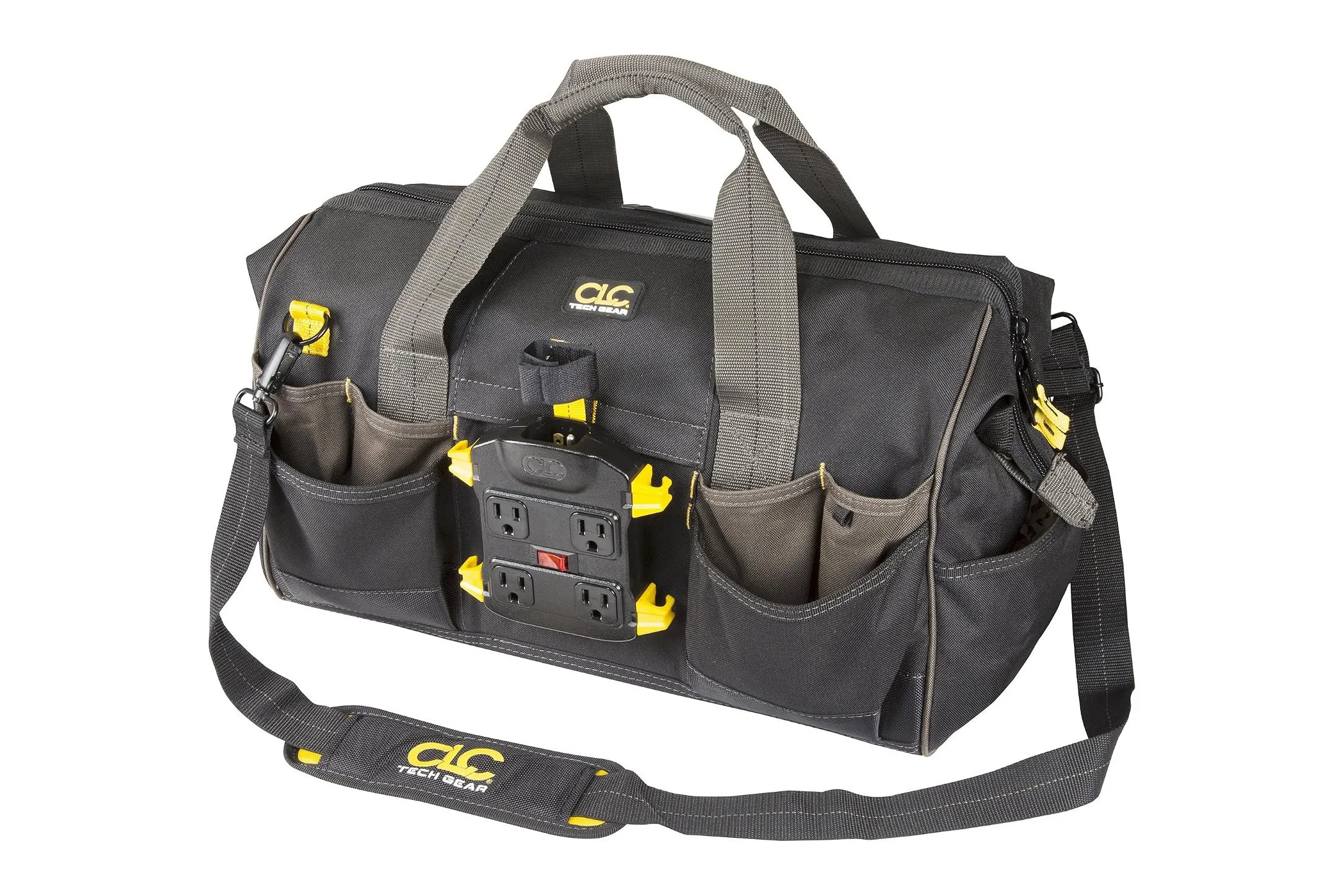
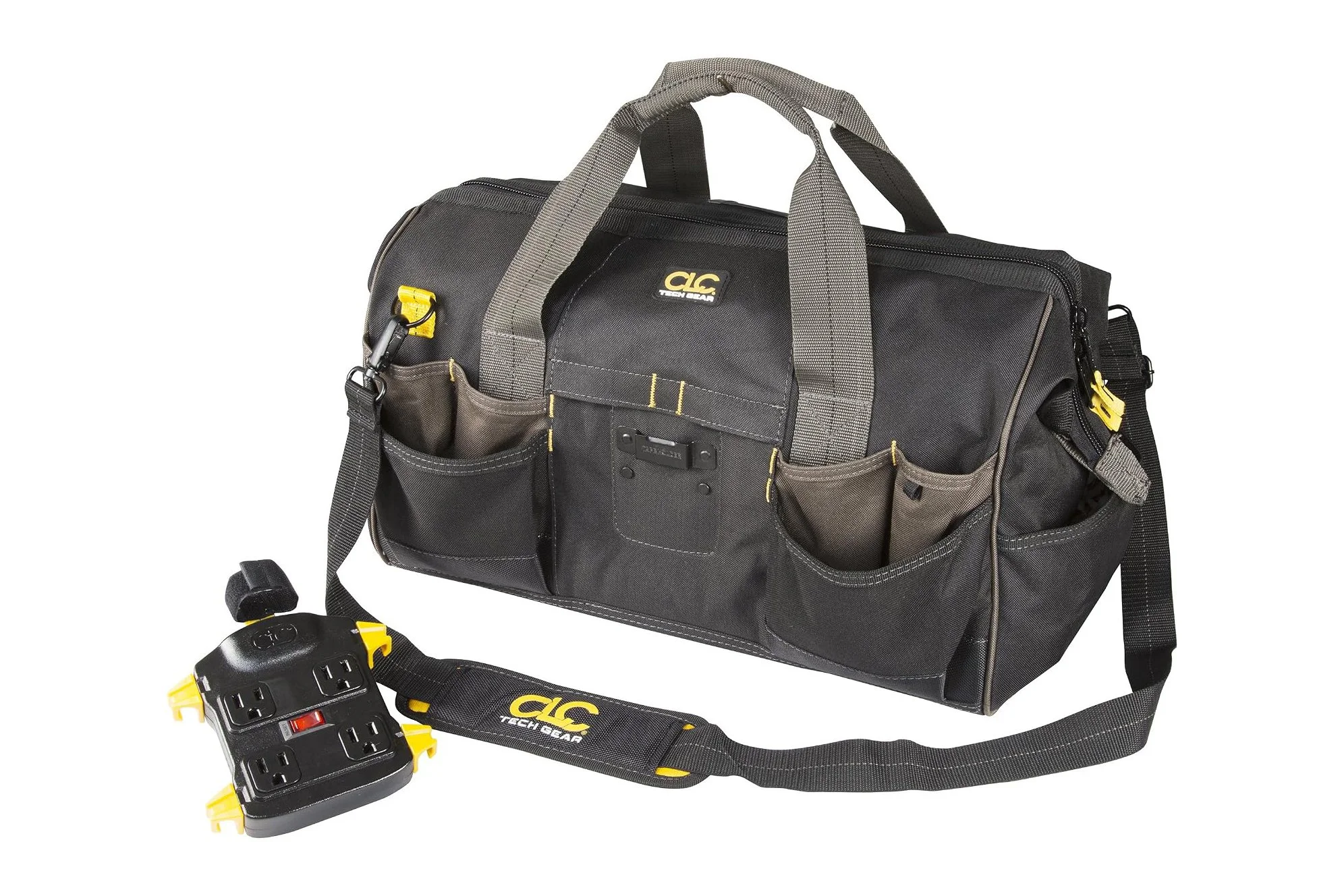
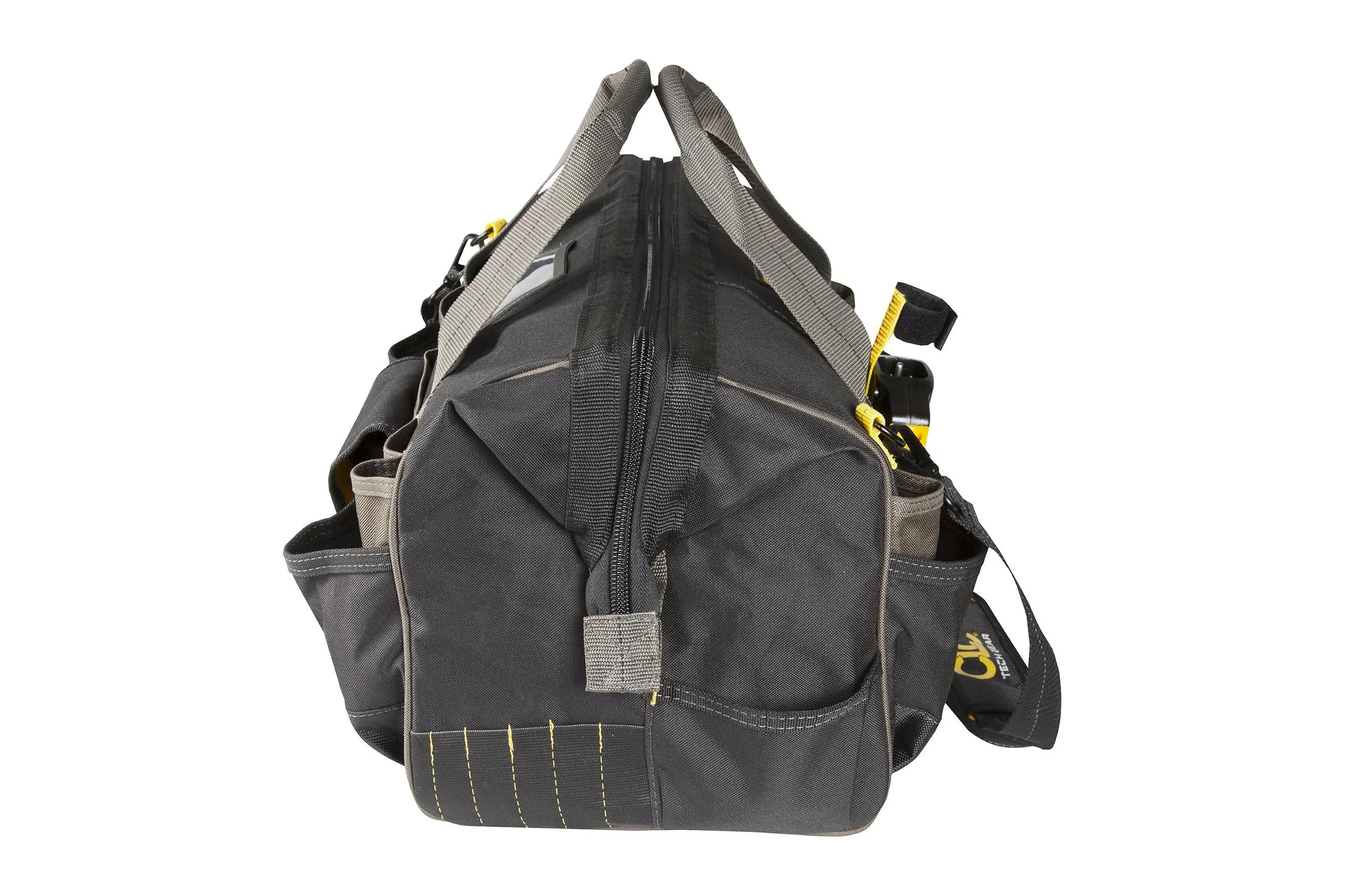
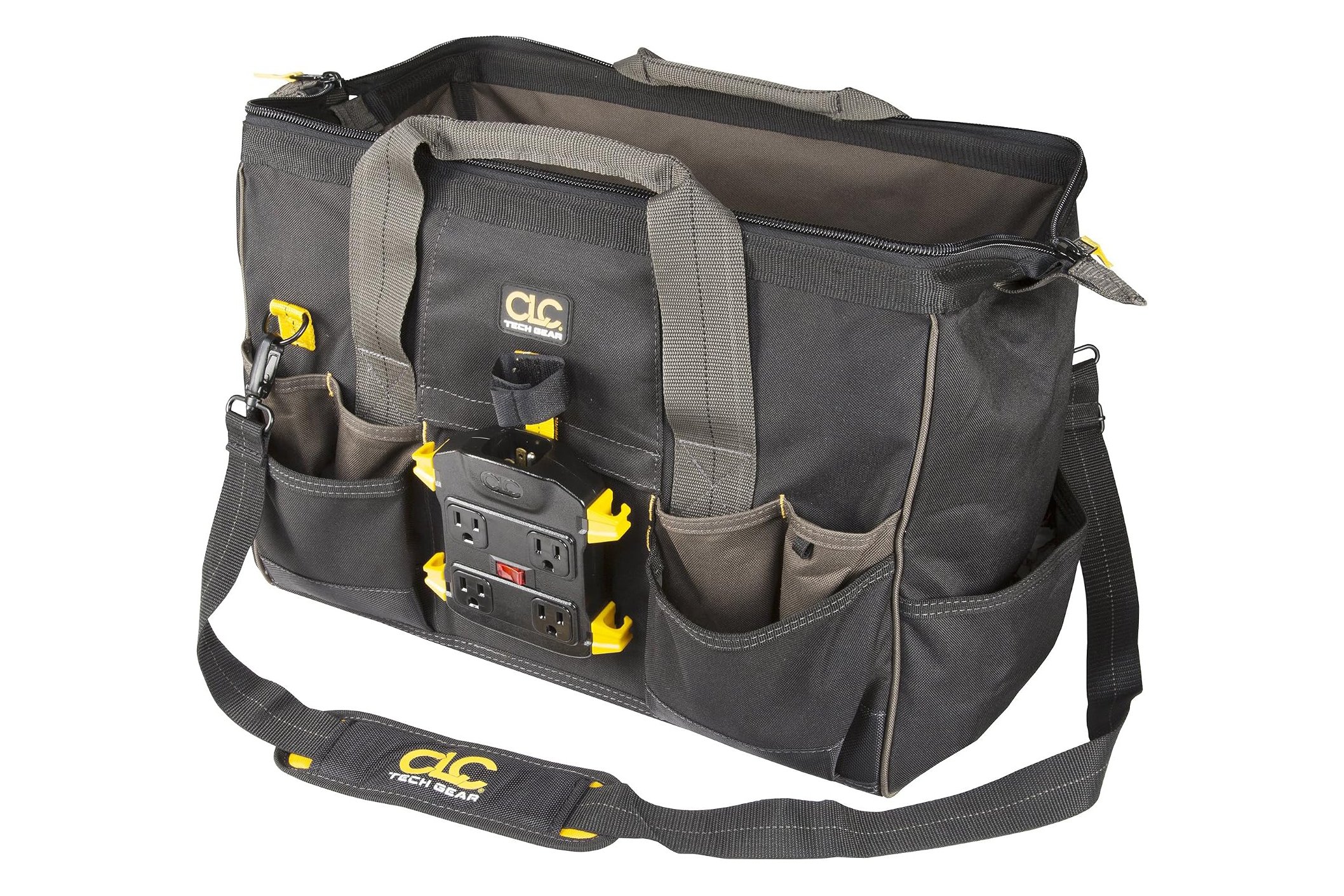
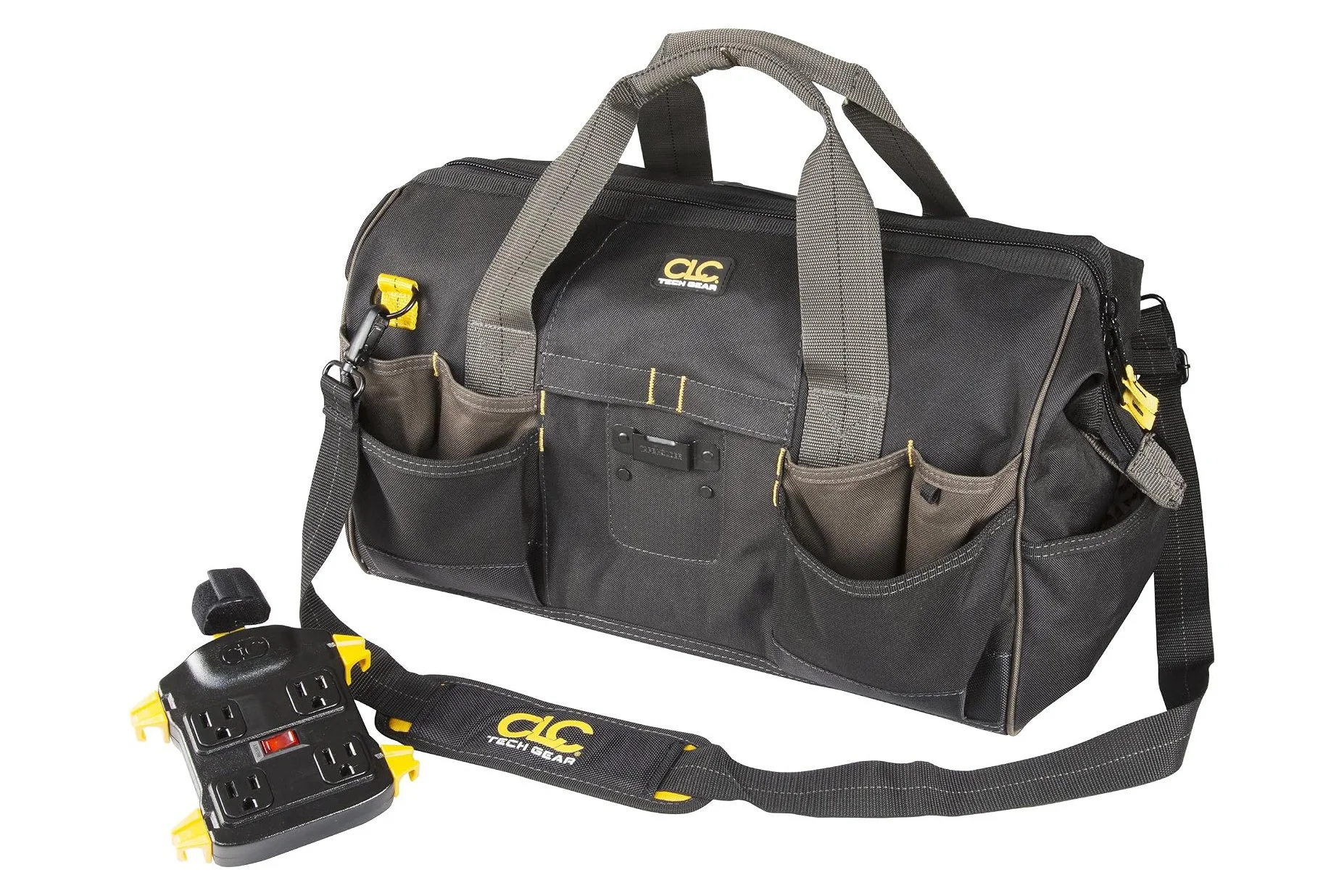
The P235 started from a problem every contractor has: limited outlets, too many cords, and no good place to put a power strip. I designed the bag and the four-outlet surge protector that nests directly into the bag, from category research and opportunities through factory samples.
DISCIPLINES
Soft-goods design / Electronics development / Ideation / Prototyping + T&E / UL testing & compliance / Production handoff
PHASE 01
CLC Tech gear: category opportunity research
INDUSTRY CONTEXT / COMPETITOR RESEARCH — 2012 MARKET LANDSCAPE
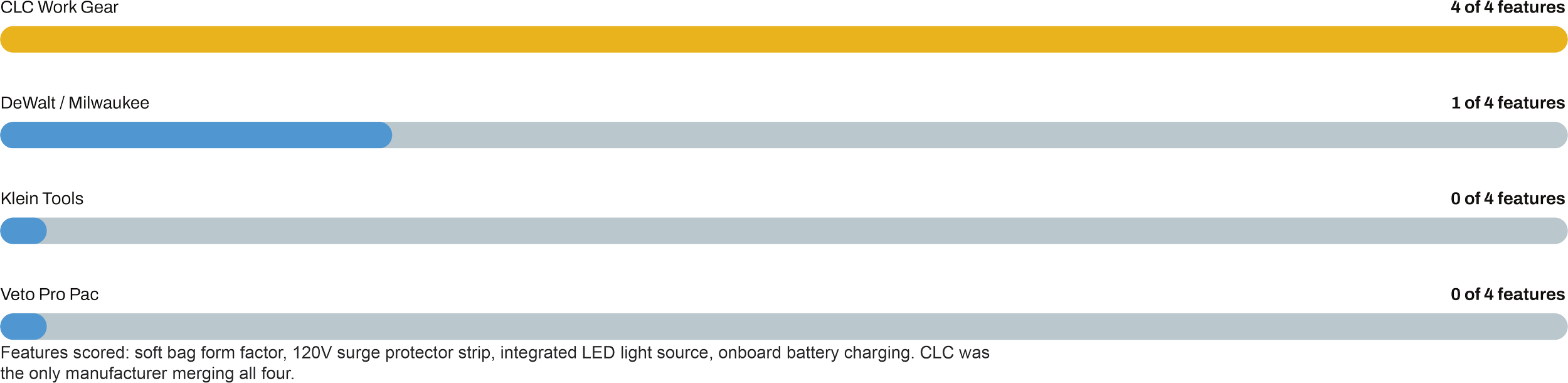
The core problem tradespeople named was simple: every crew was still carrying a loose power strip that got buried, tangled, or left in the truck. In 2012, CLC Work Gear was essentially the only major manufacturer offering a soft-sided tool bag with an integrated 120V AC multi-outlet surge protector — DeWalt and Milwaukee kept jobsite power confined to rigid plastic boxes, and soft-bag rivals like Klein Tools and Veto Pro Pac shipped zero power integration.

01 — THE PROBLEM ON-SITE
loose cords, nowhere to live
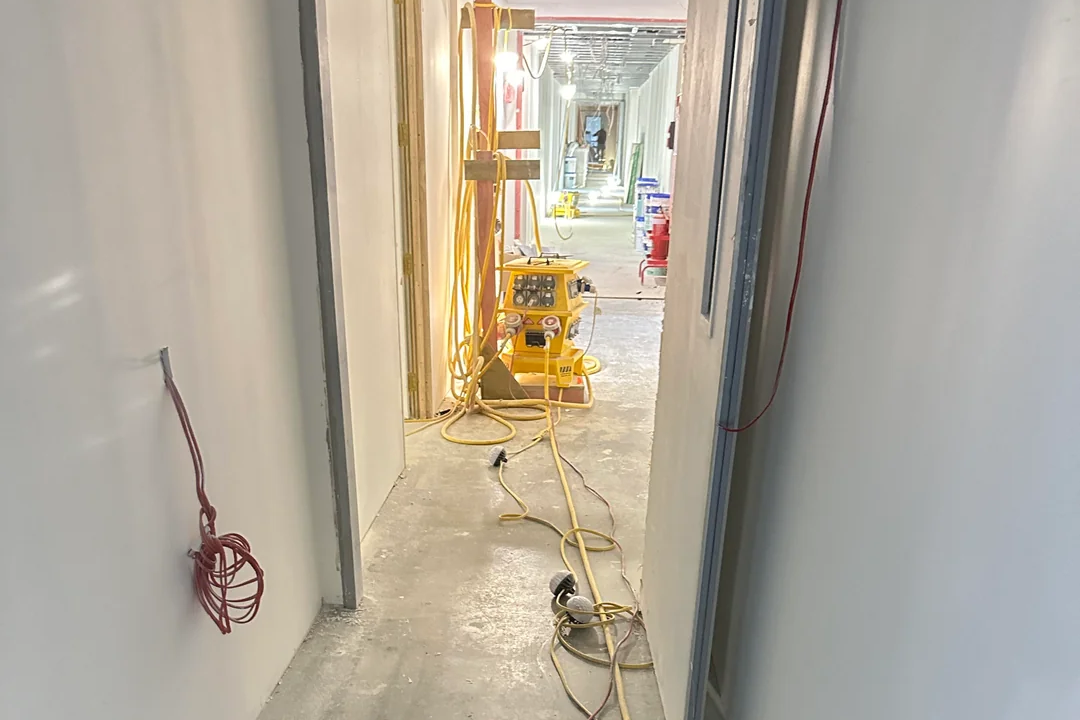
TANGLED & UNMANAGED — Cords looped, buried, and coiled with nothing to organize them.
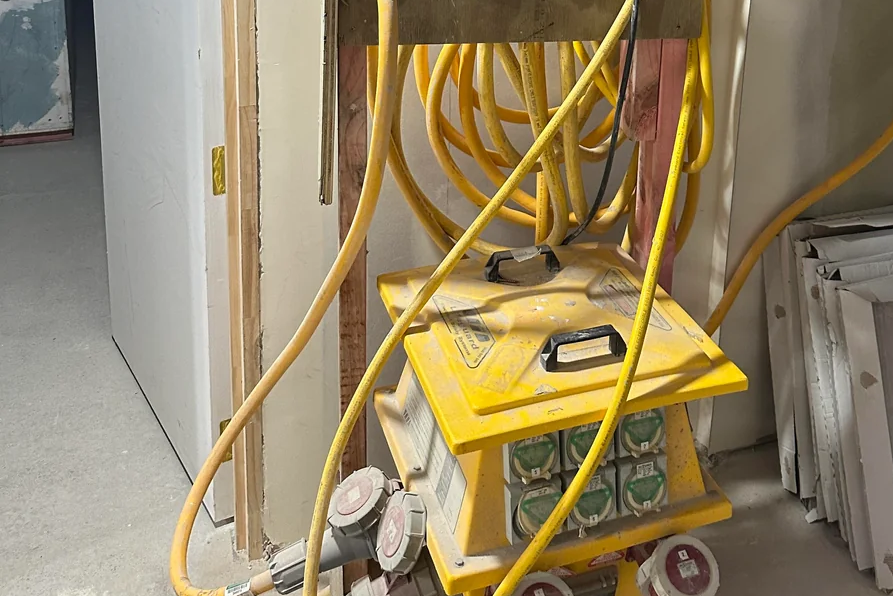
RIGID, NOT PORTABLE — Hard power box, wall-strapped and hand-wired and not bag-mounted.
Design takeaway: A successful design must solve the environmental and maintenance loops — fully removable electronic/wiring cores for easy washing — rather than add tech for its own sake.
02 — 2012 BRAND FEATURE MATRIX
an open field for premium differentiation
03 — EVOLUTION OF POWERED TOOL STORAGE
an open field for premium differentiation
2010 — 2012
CLC introduces Tech Gear™ with built-in 120V surge protectors and MP3 speakers.
2010 — 2012
DeWalt & Milwaukee expand Bluetooth radio chargers & ToughSystem hubs.
2016 — 2018
Klein Tools adopts 5V USB pass-through ports for tech backpacks.
2019 — PRESENT
High-capacity battery stations and smart IoT power storage.
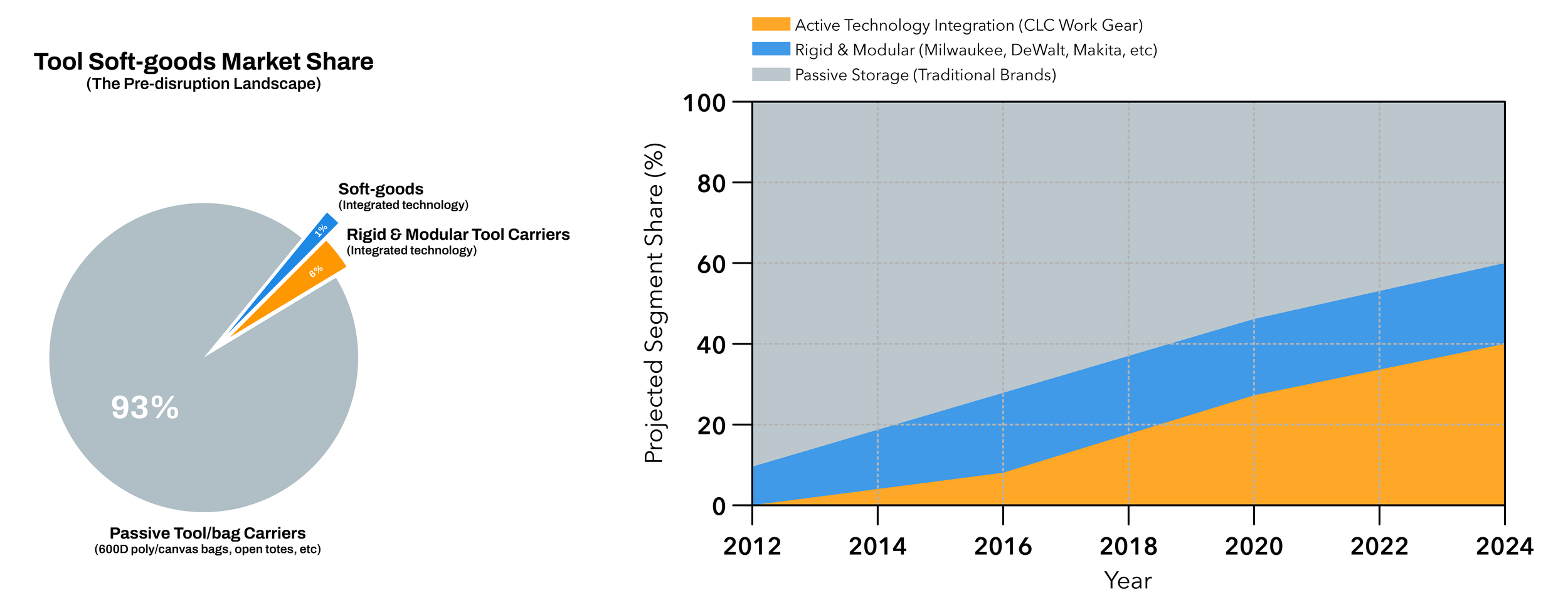
CATEGORY GROWTH — Projected growth opportunities for technology-integrated tool bags and carriers.
04 — DESIGN TAKEAWAYS
WHAT THE RESEARCH DEMANDS OF THE DESIGN
CABLE-MANAGEMENT
Cords were tangled, buried, or left with no home. The power strip has to live on the bag, not as a separate loose accessory.
CONTINUED INNOVATION
CLC was the only 2012 brand merging soft-bag form factor with power technology. Integrating cable management and surge protection on the jobsite is the next evolution.
OWN THE WHITE SPACE
No rival brand offers a meaningful technology improvement geared to help tradespeople on the jobsite. Expanding Tech Gear into powered accessories fills an industry gap.
ENGINEERED COMPLIANCE
Meet UL/safety compliance and engineer the bag to safely integrate power into a soft-sided tool carrier.
PHASE 02
IDEATION
SKETCHES / FORM EXPLORATION
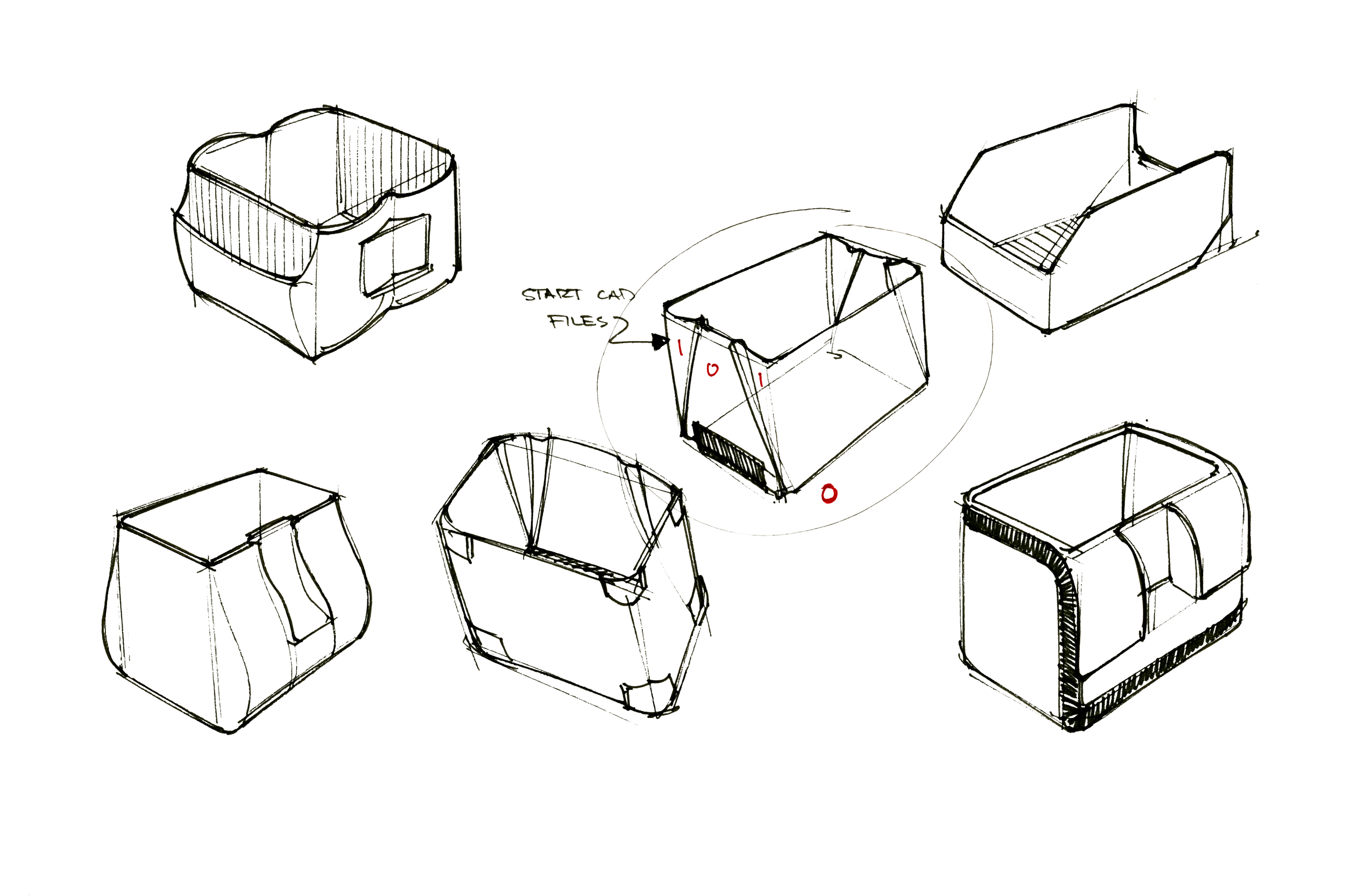
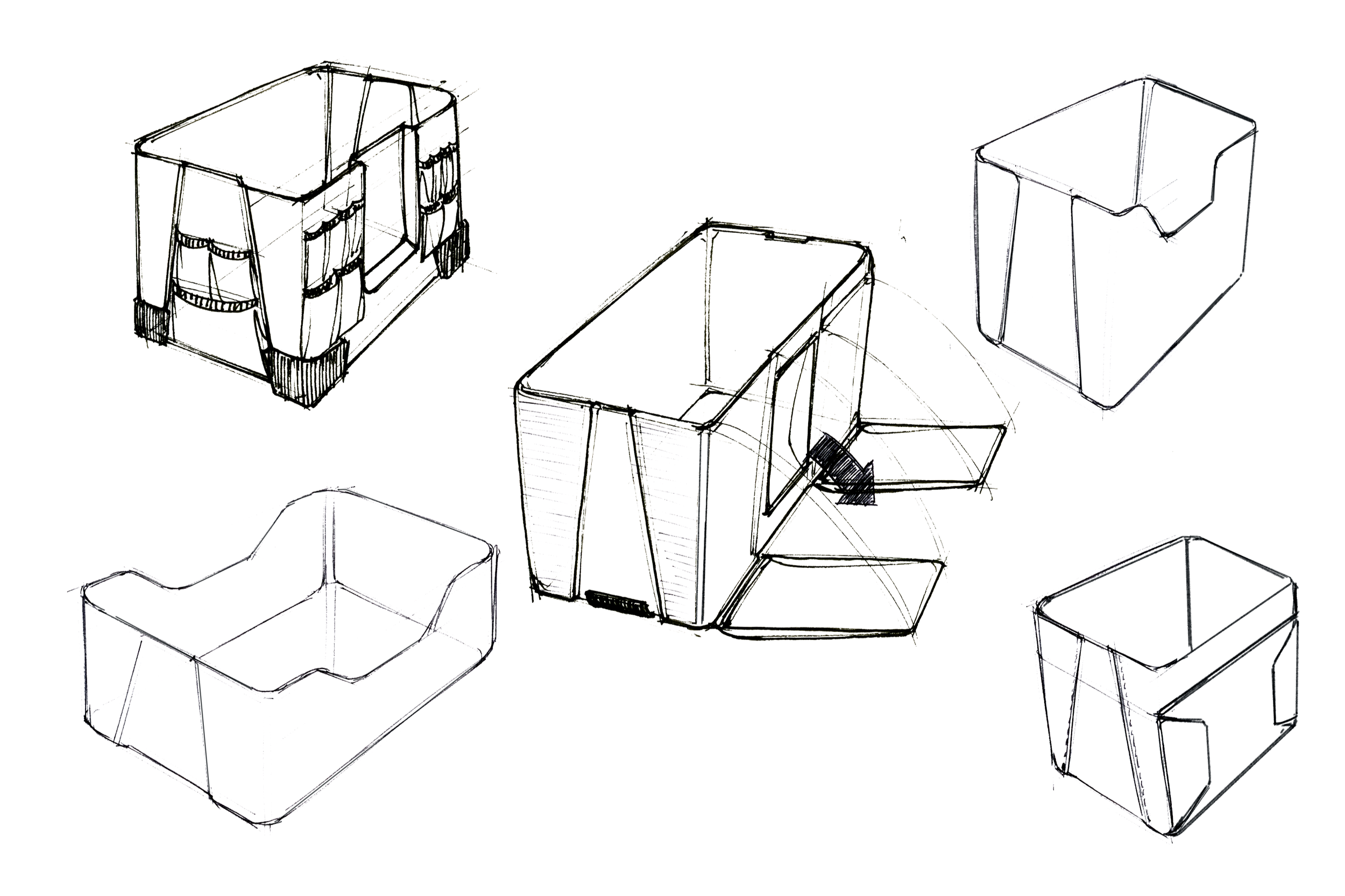
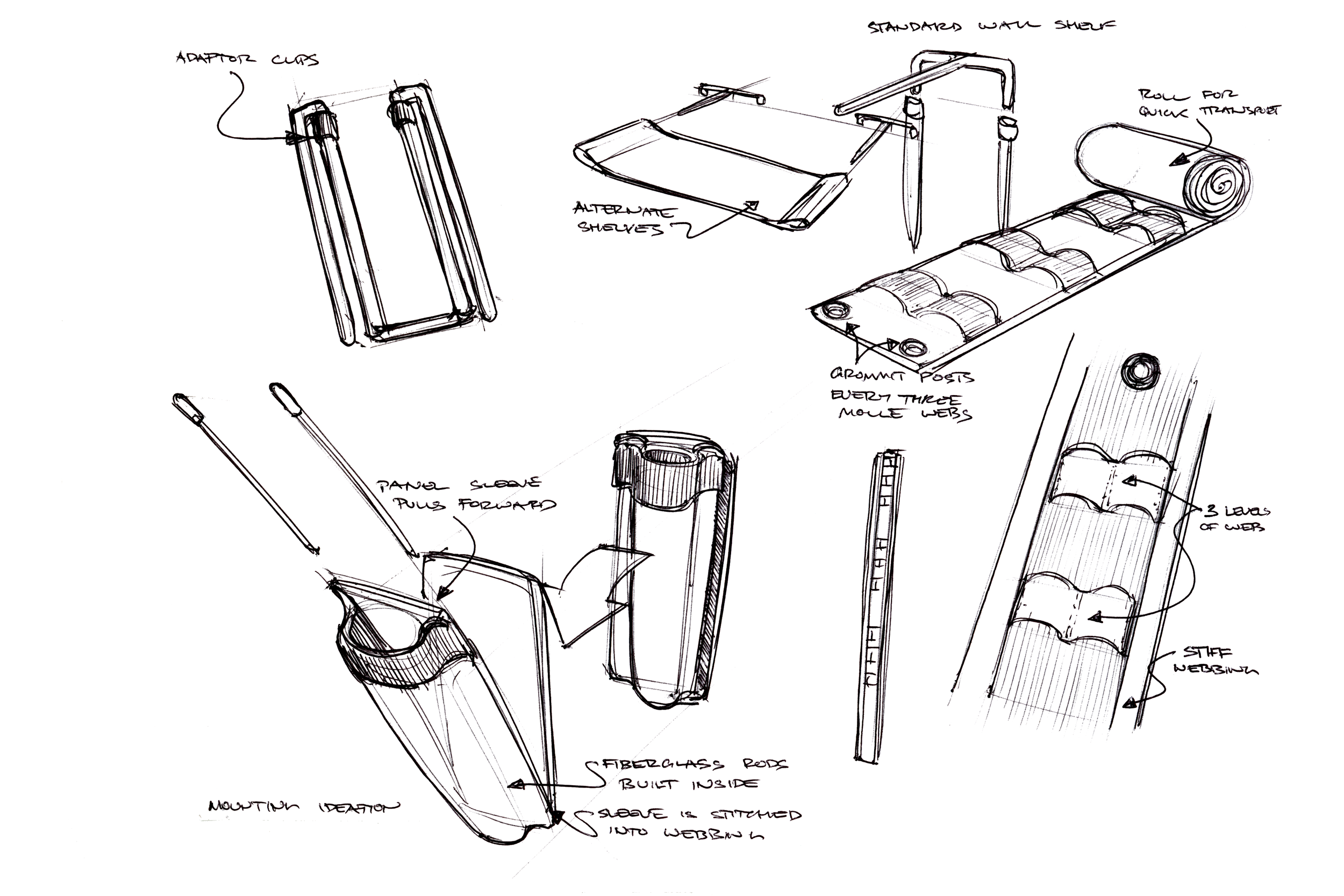
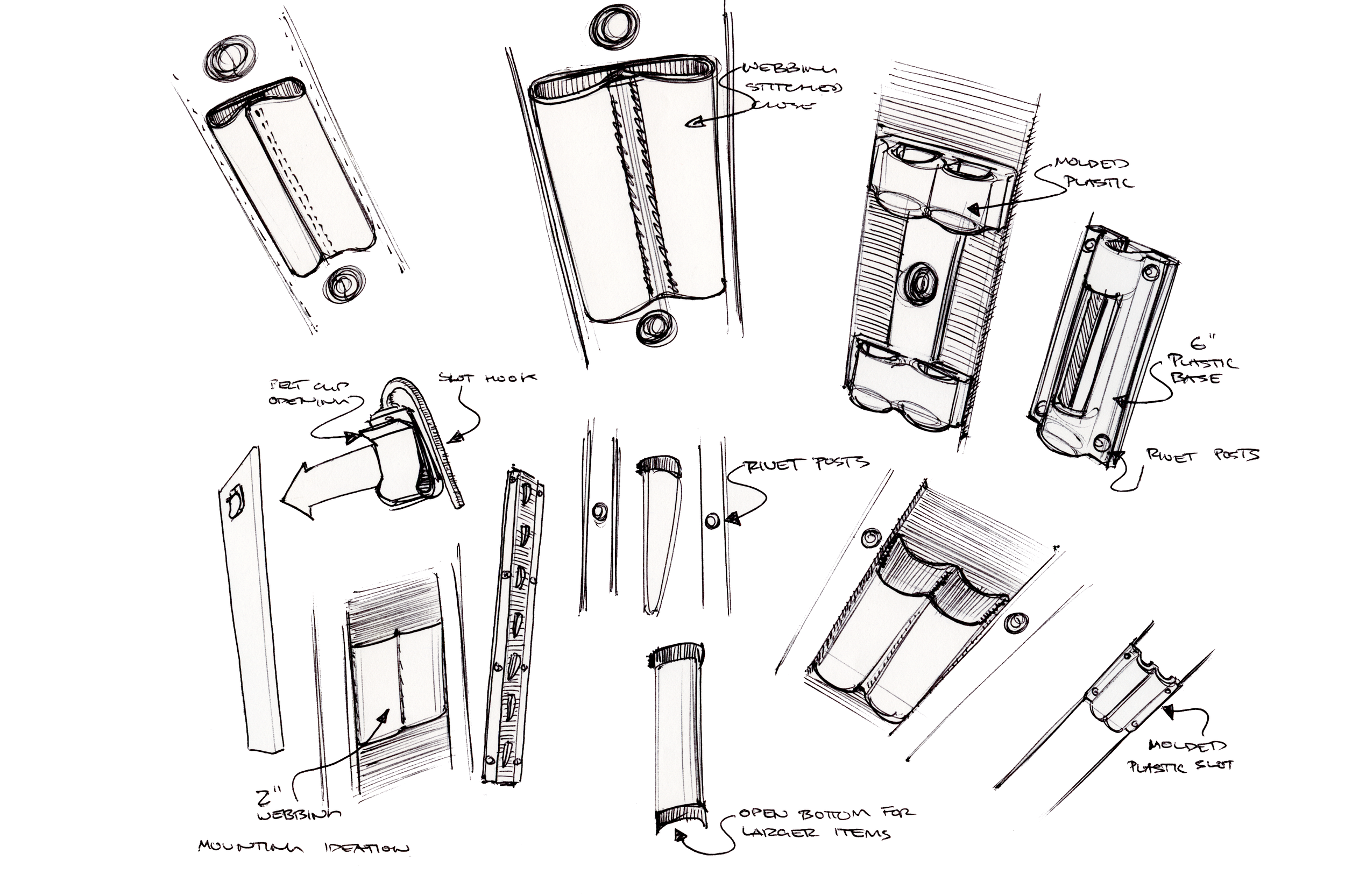
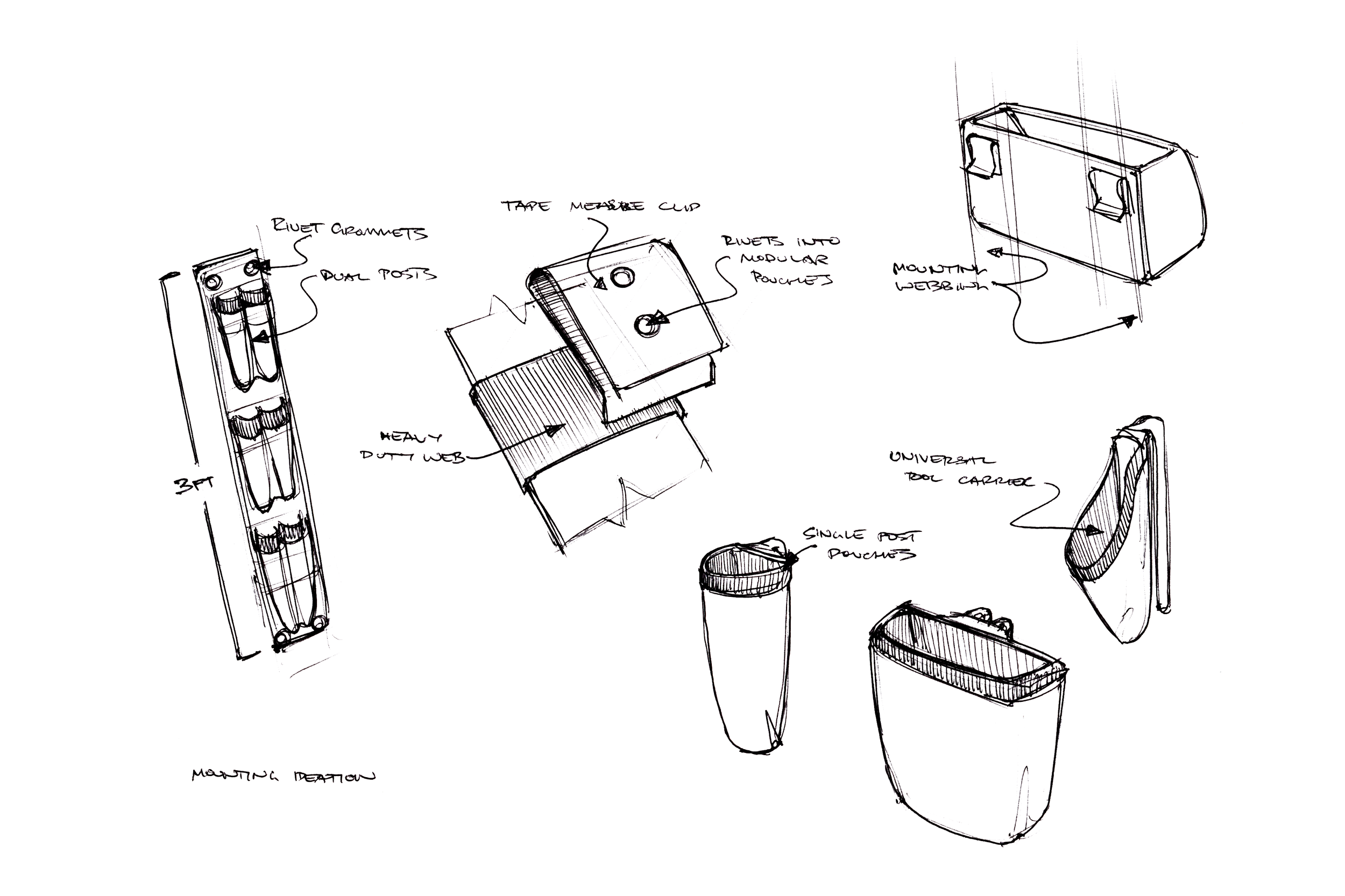
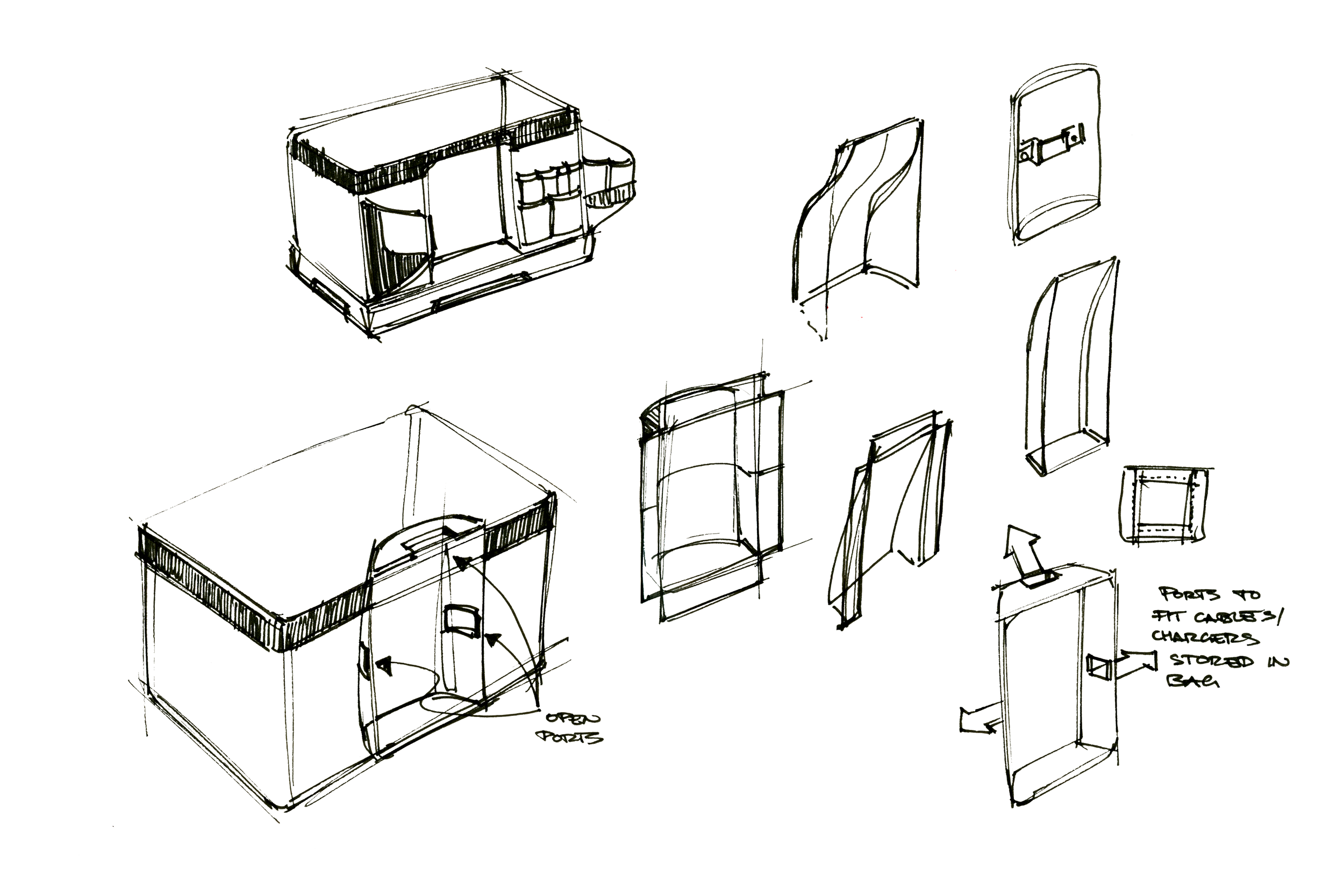
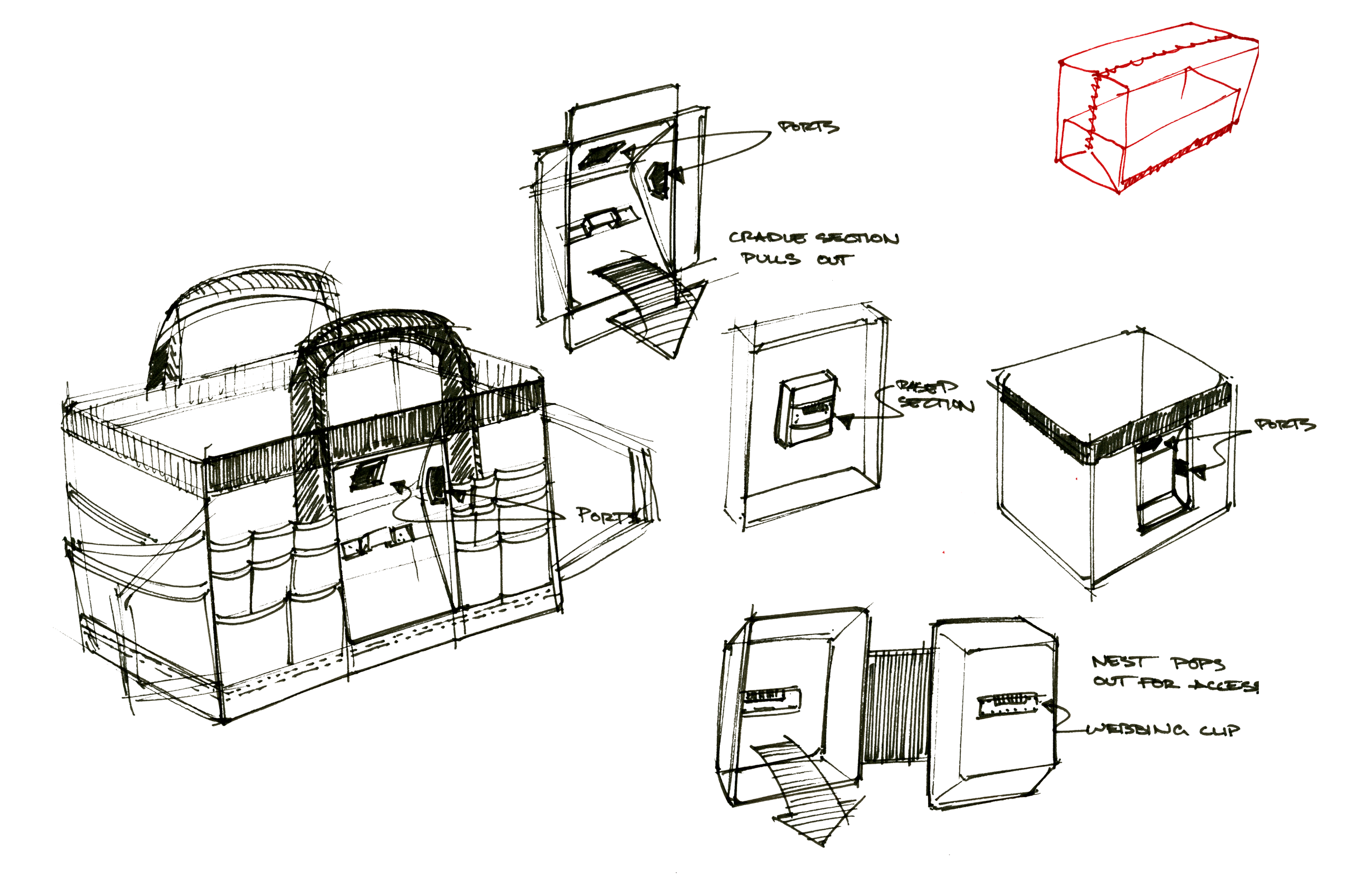
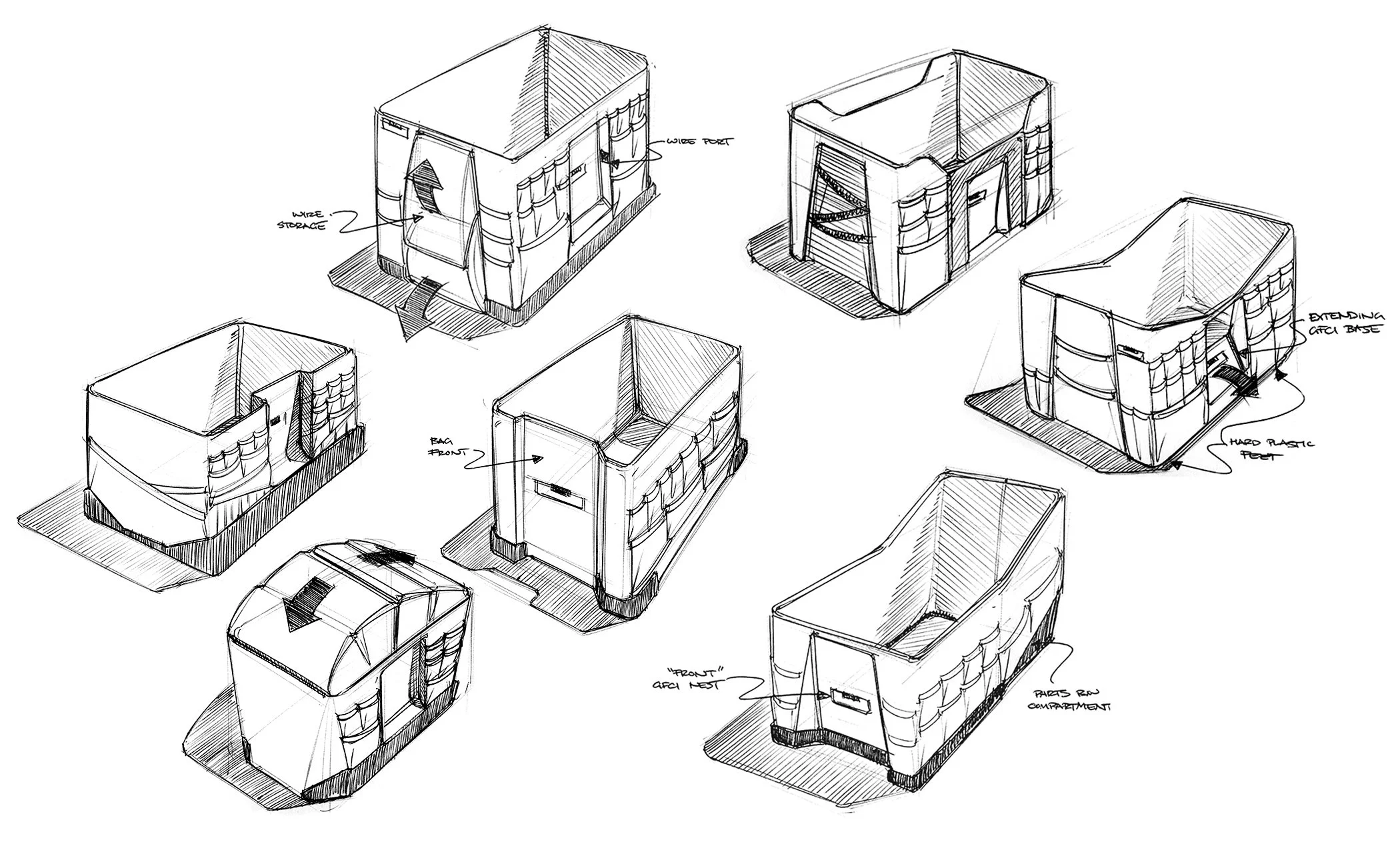
This is where most of the actual design work happened, in a sketchbook. Bag form, panel layout, and mounting hardware were worked in parallel, because the surge protector couldn't be a bolt-on: it had to nest into the bag's own webbing and pocket structure without stealing tool storage. Dozens of passes on how the unit clips in, how cords route, and where it sits so it doesn't fight the handles, before a single prototype got cut.
BAG FORM IDEATION
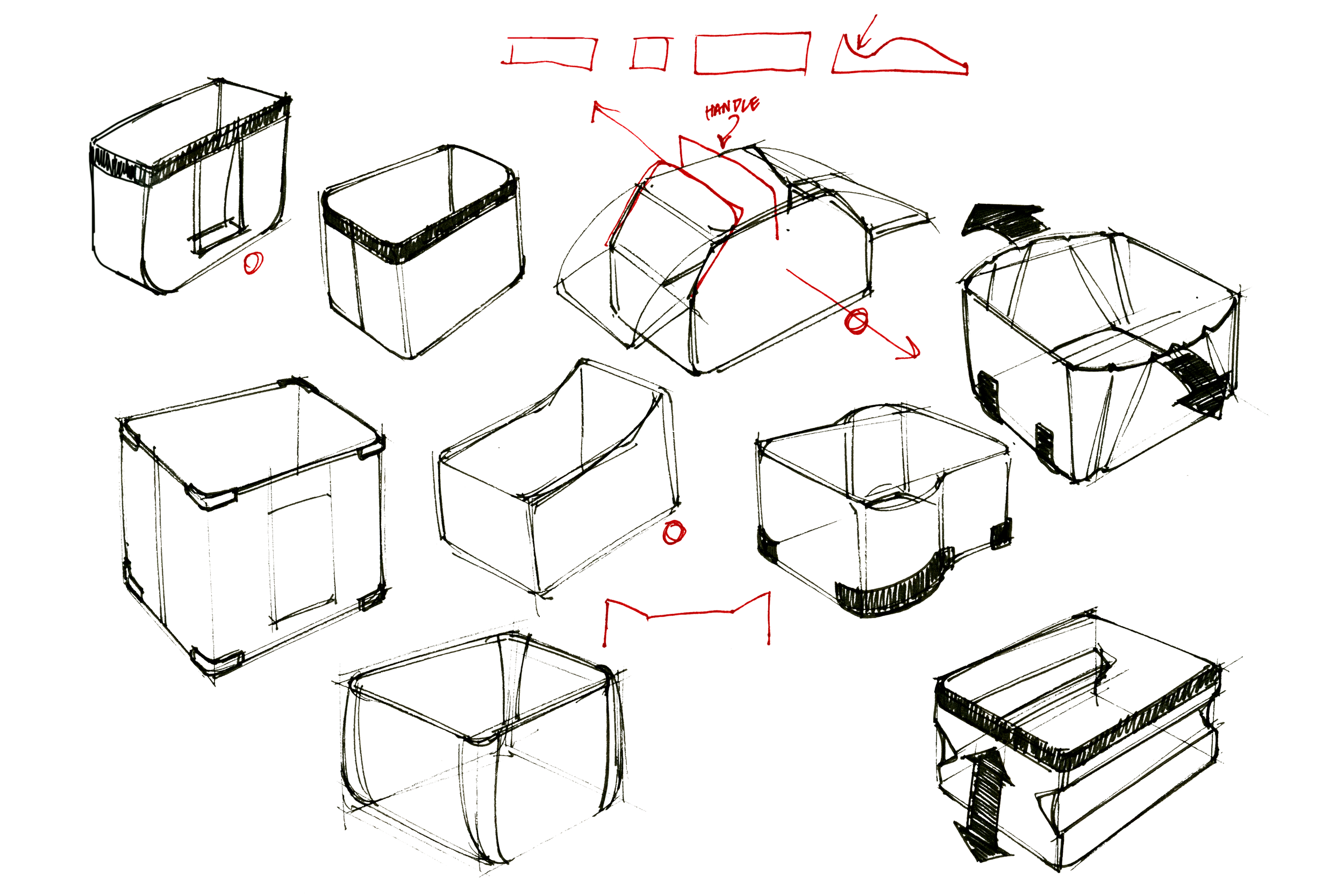
PANEL LAYOUTS
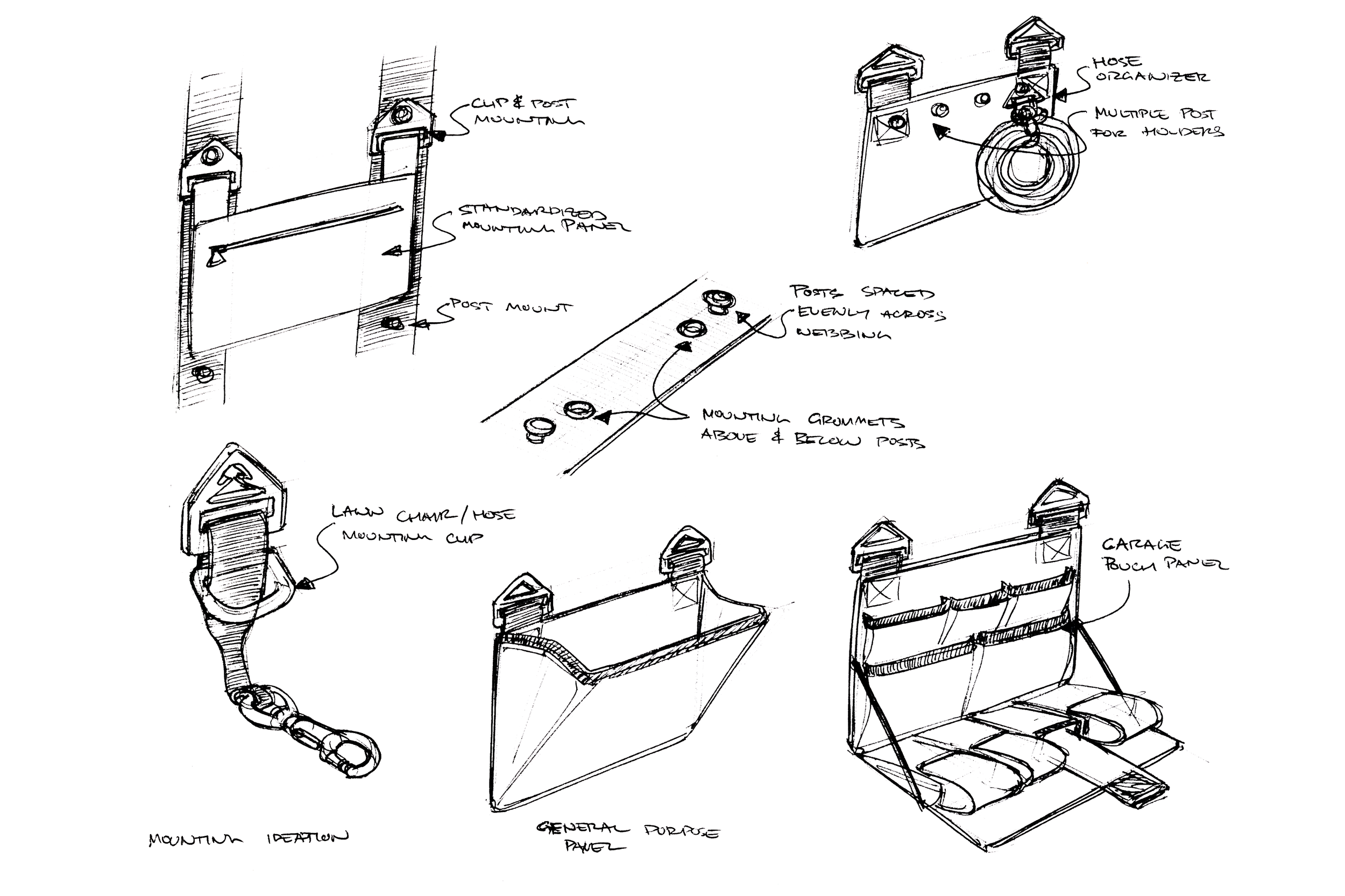
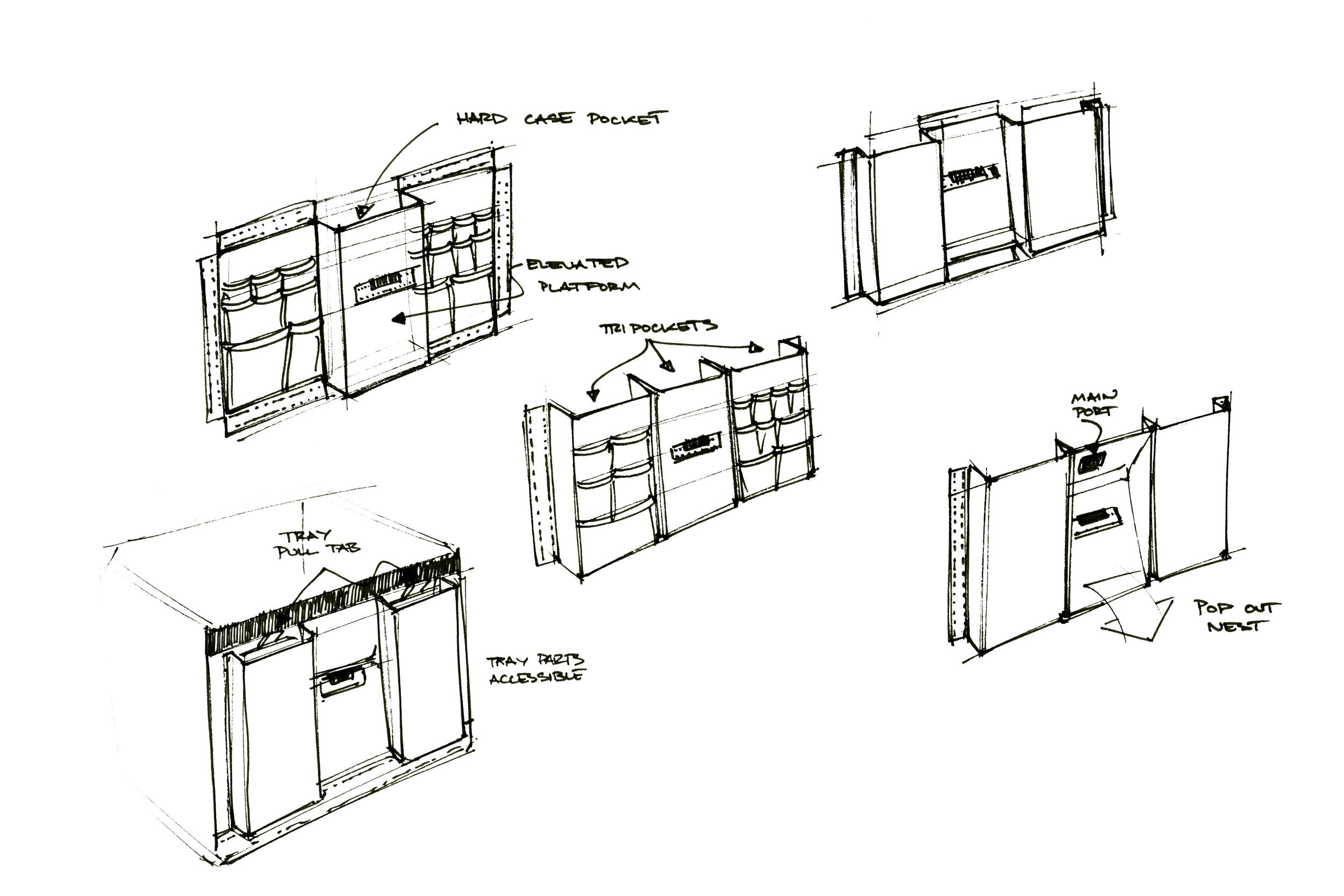
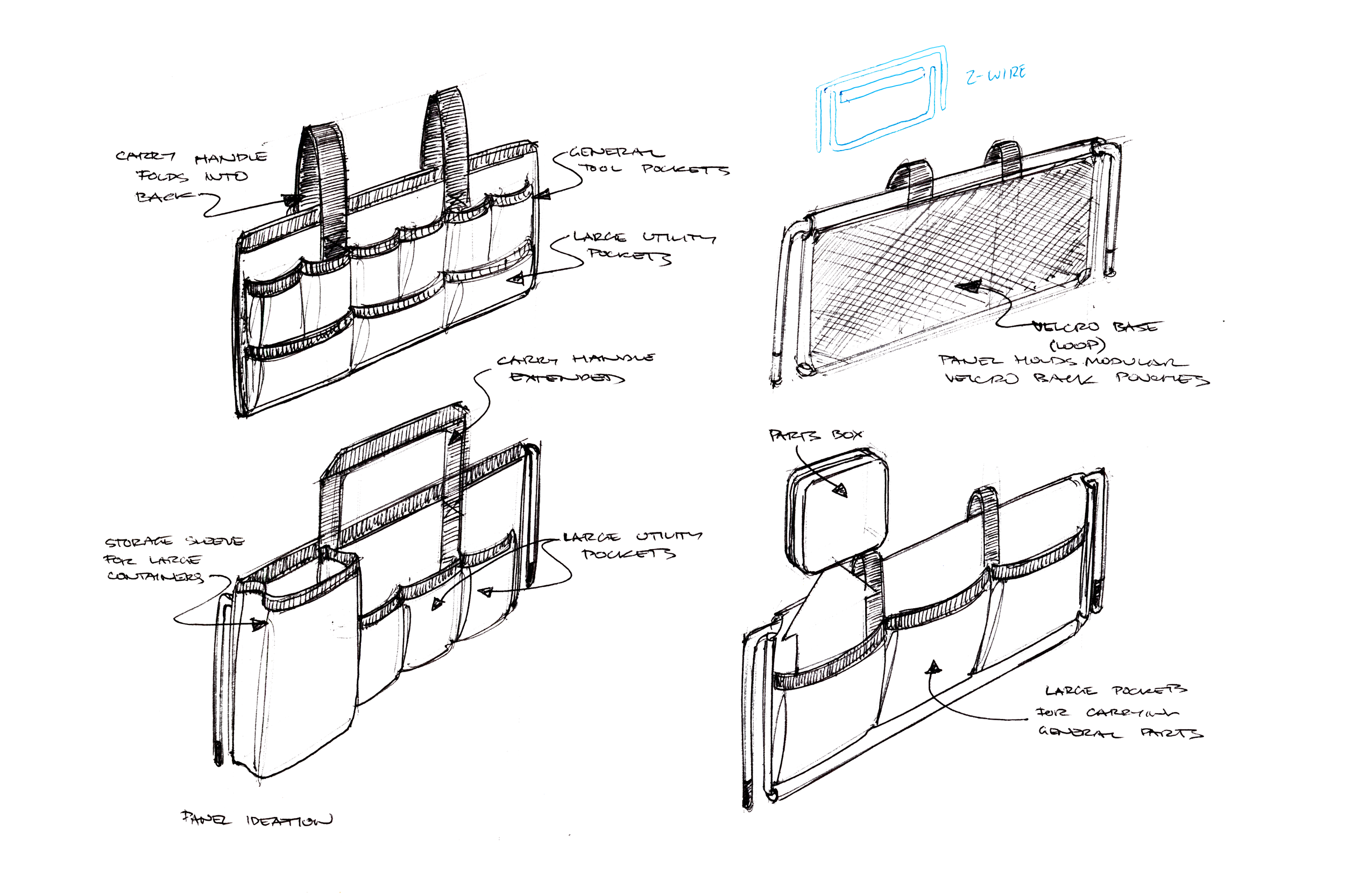
MOUNTING HARDWARE DESIGN
SURGE PROTECTOR MOUNT DESIGN
FULL BAG STUDIES
PHASE 03
DEVELOPMENT
CAD / TOOLING / ELECTRICAL DESIGN
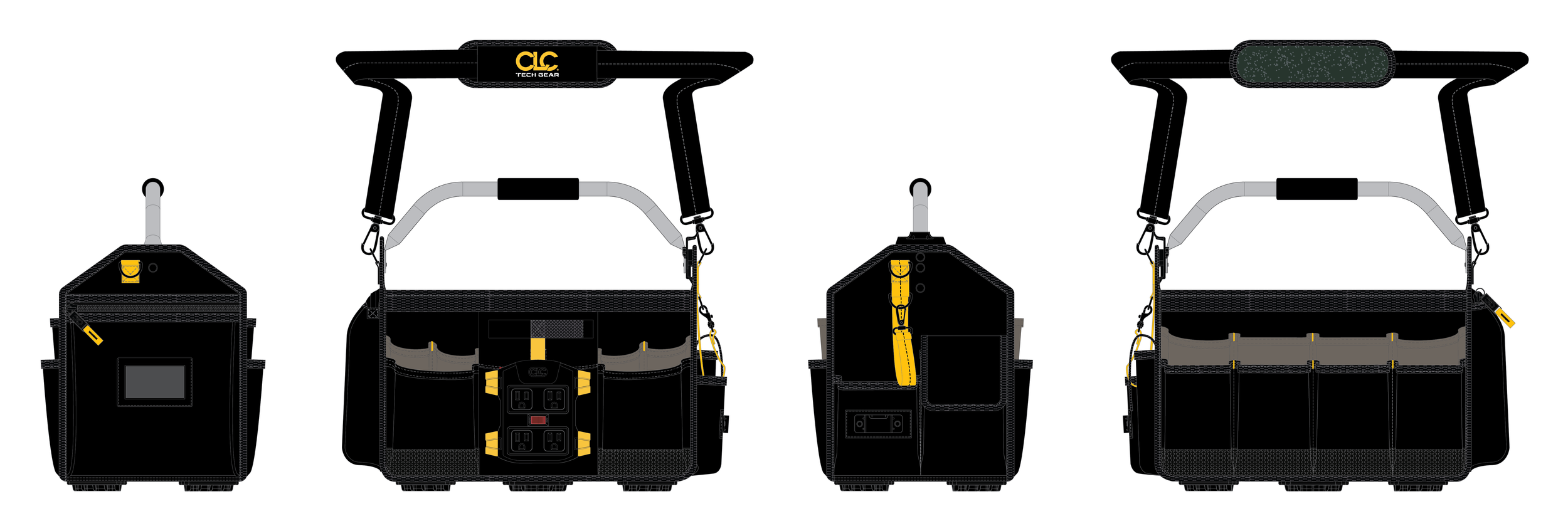
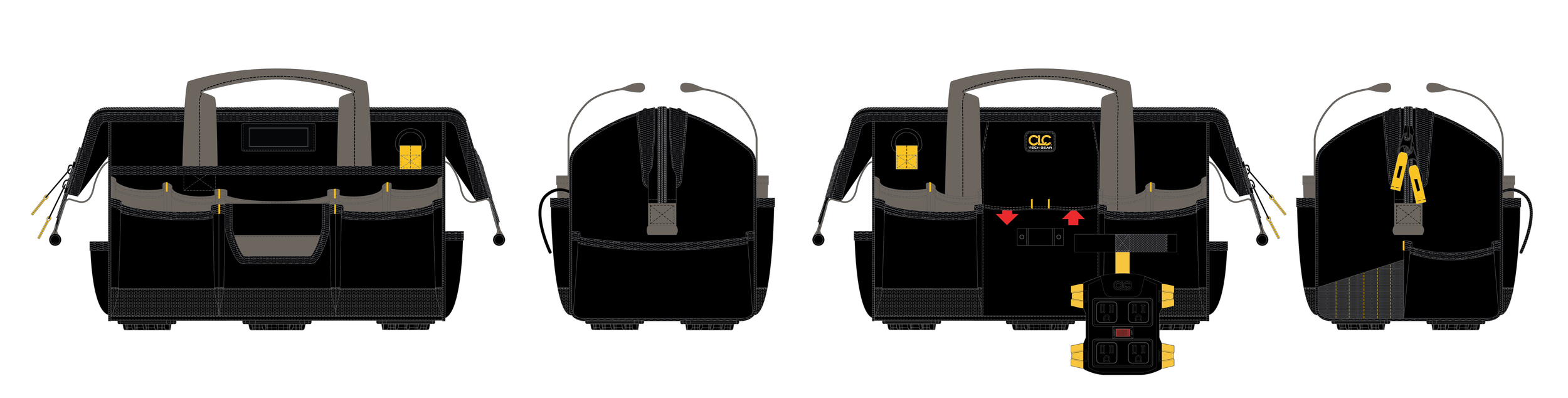
Sketches became CAD once the panel design and mounting positions were settled. Variations of the bag were explored, both open and closed. The surge protector was designed solely in Solidworks, with internal componentry developed by our overseas factory. At every CAD revision, the internal layout, receptacle spacing, wire gauge, and breaker placement were checked against real UL and CUL clearance requirements, before the final mold was cut.
OPEN-TOP BAG ORTHOGRAPHIC VIEWS
CLOSED-TOP BAG ORTHOGRAPHIC VIEWS
SURGE PROTECTOR - CAD & SAMPLE ELECTRONICS
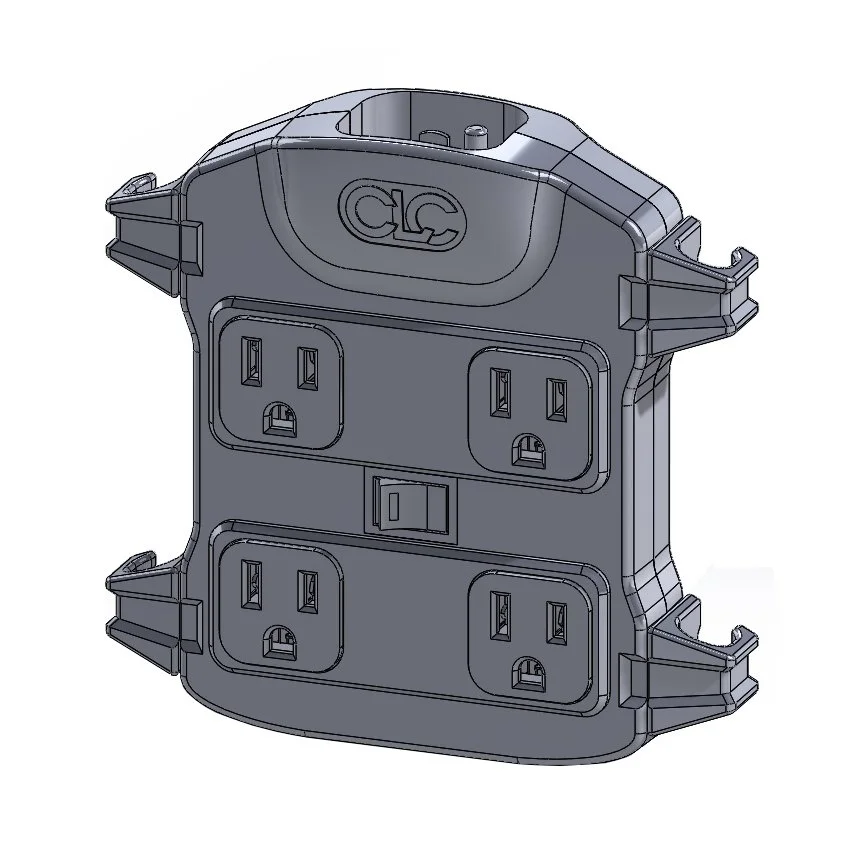
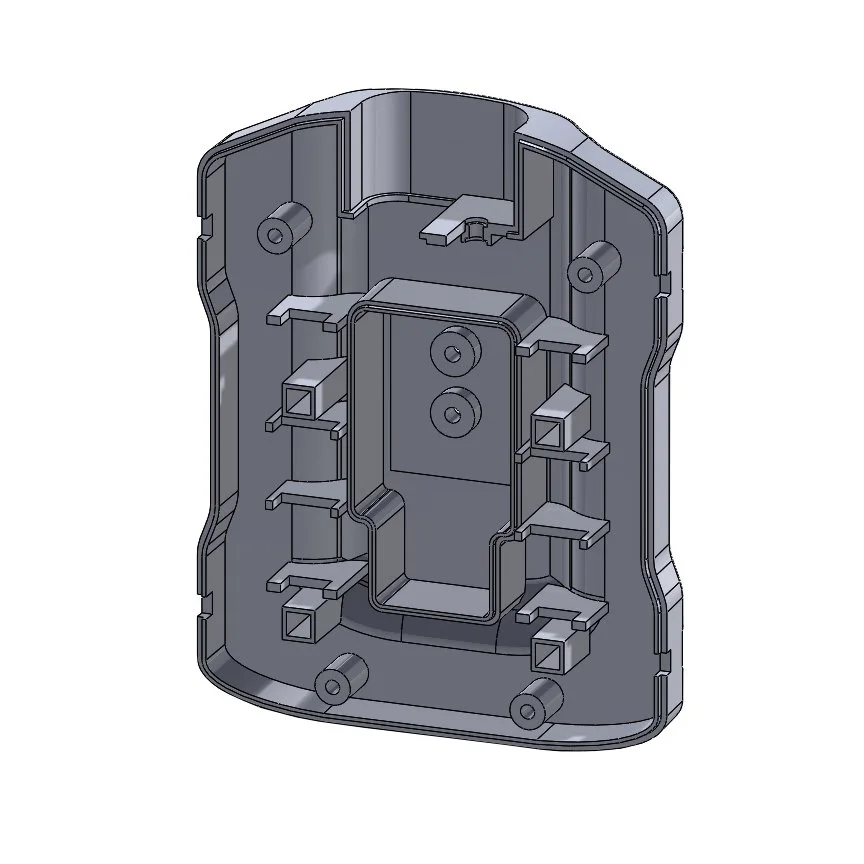
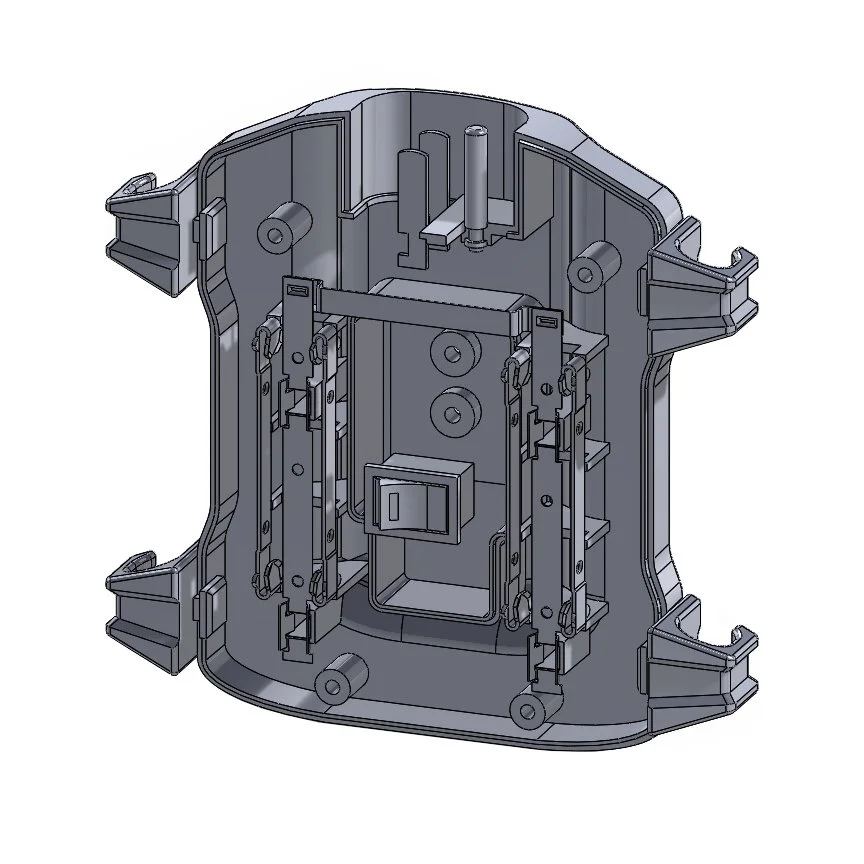
ISOMETRIC VIEWS - Before handoff to the factory, we developed as much of the surge protector as possible with physical samples, then translated those components into Solidworks.
TOOL BAG & SURGE PROTECTOR TEST FITTING
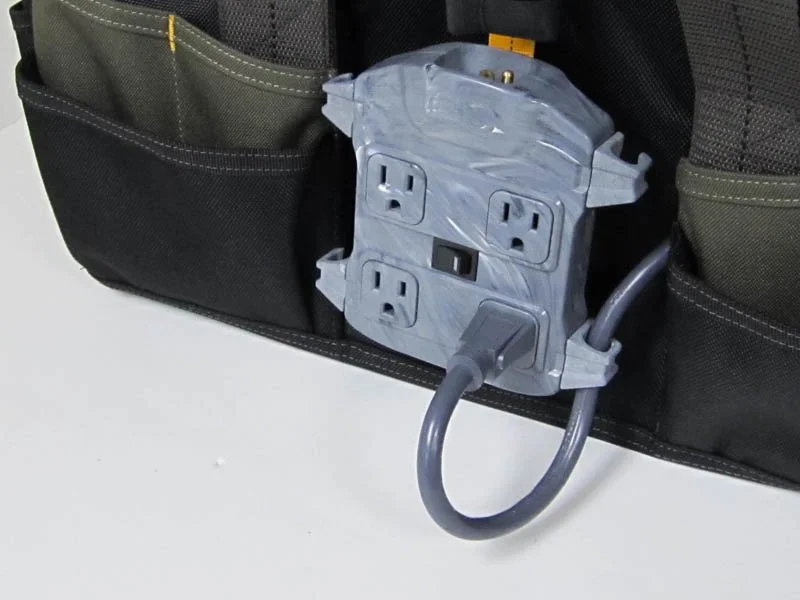
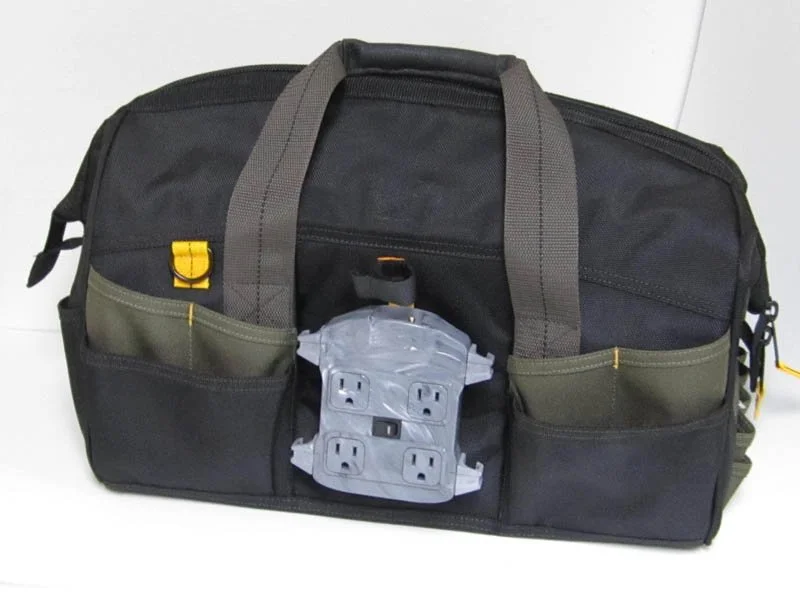
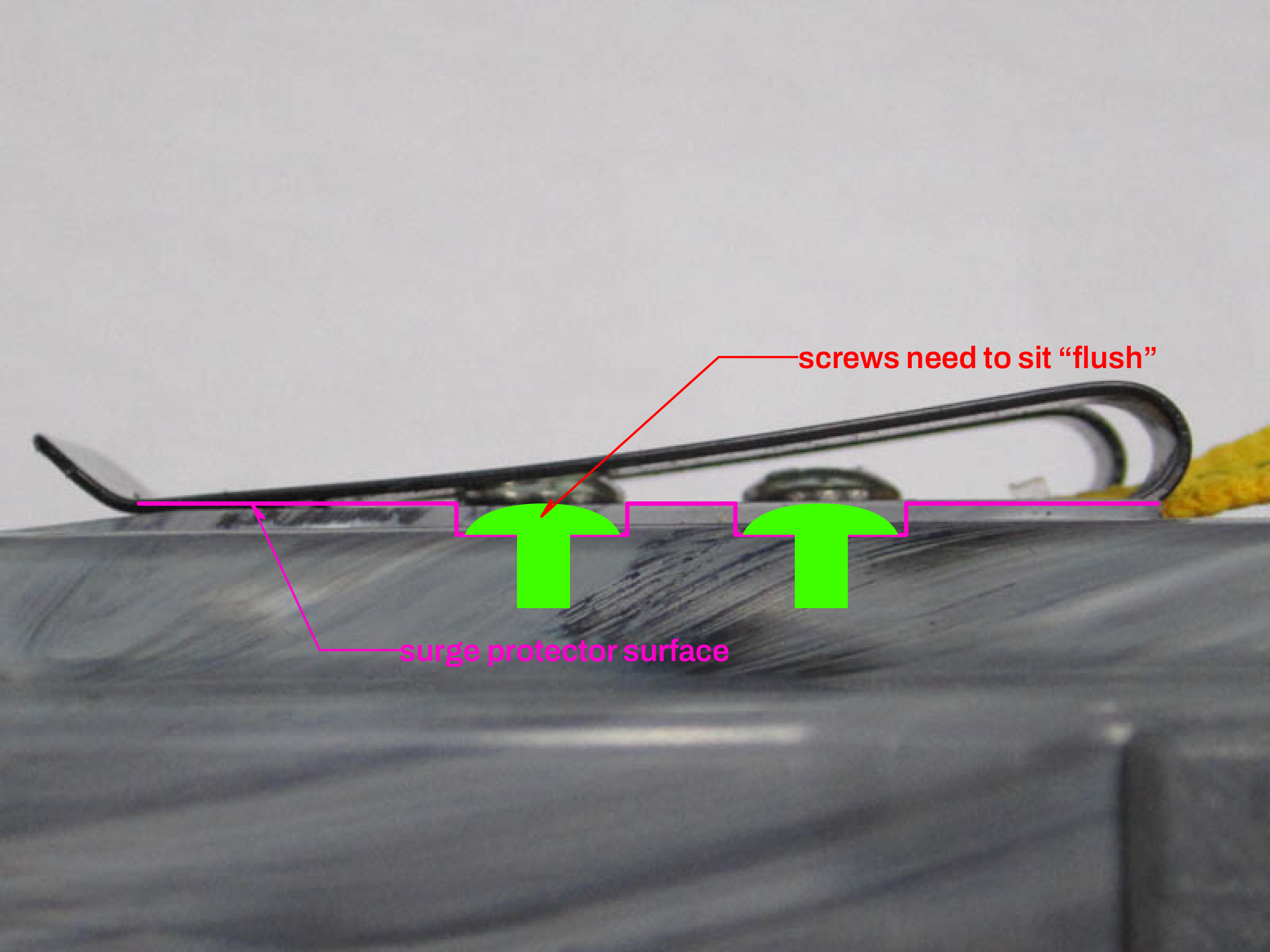
CAD TO PHYSICAL SAMPLES - Wiring checks & reviews, and mounting-clip fit checks against the bag panel.
SURGE PROTECTOR SHELL DEVELOPMENT
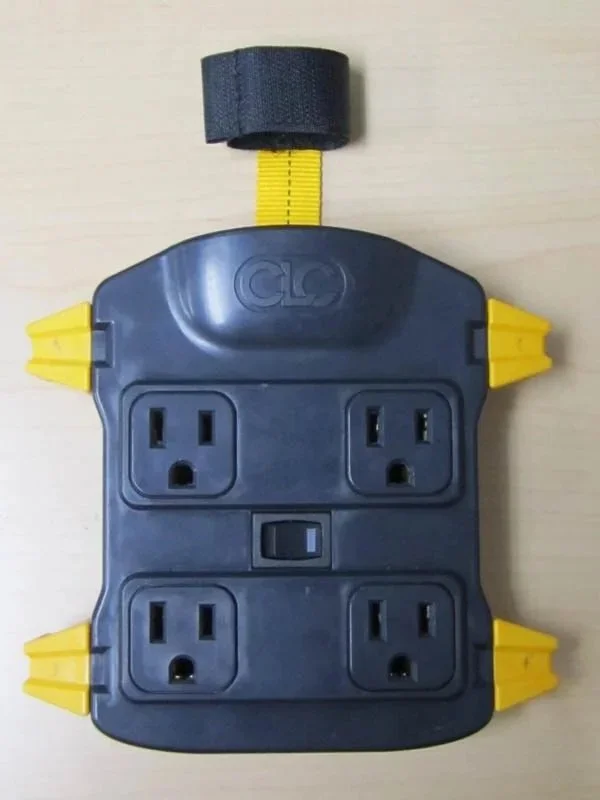
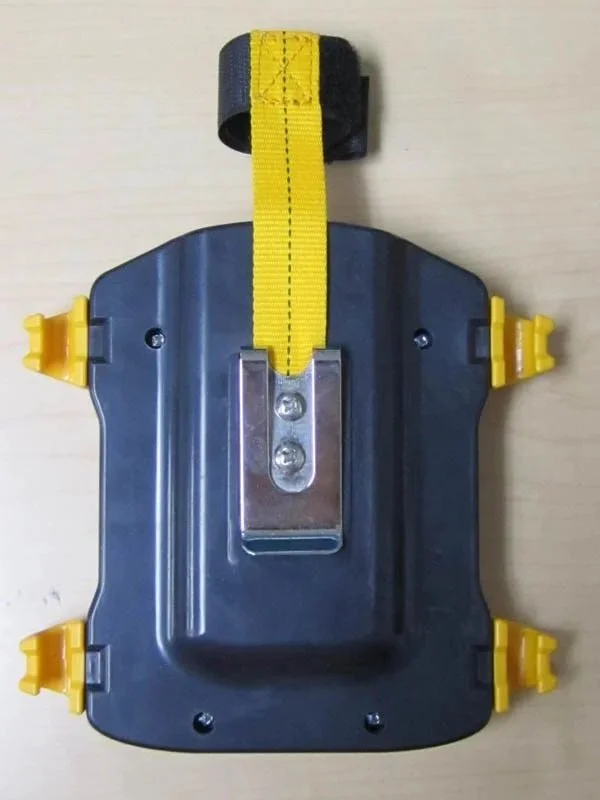
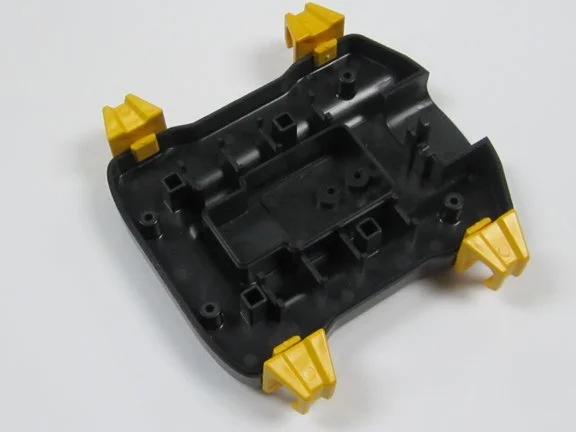
HOUSING CHECKS & FITMENT - The outer shell of the surge protector was reviewed and approved by UL and CUL.
PHASE 04
PROTOTYPES & UL COMPLIANCE
PROTOTYPING / SAMPLES
First-article samples got seated in the bag and tested under a full cord load, checked for clip pull-out force, grounding continuity, and resistance to abrasion and impact testing. Utility and compliance drove every revision, not fit and finish. All final materials and finishes were selected to meet UL and CUL requirements.
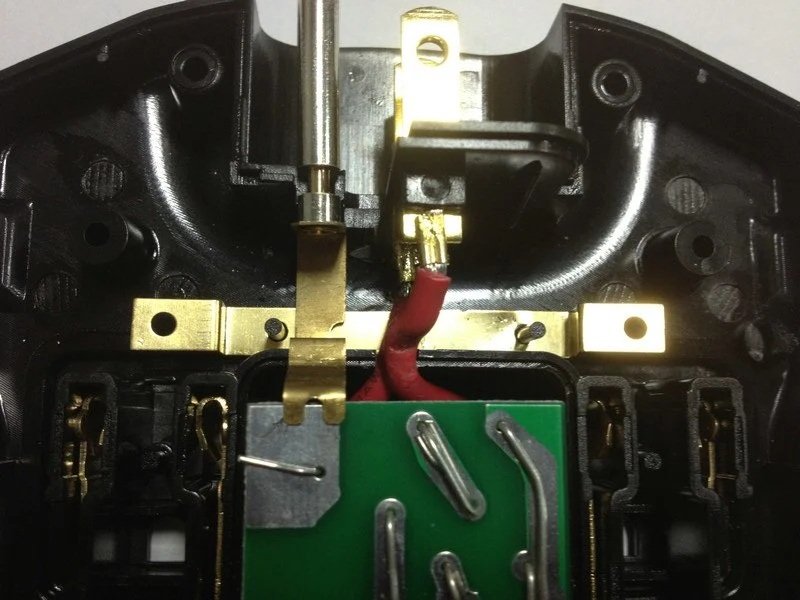
01 - Protected design for grounded plug
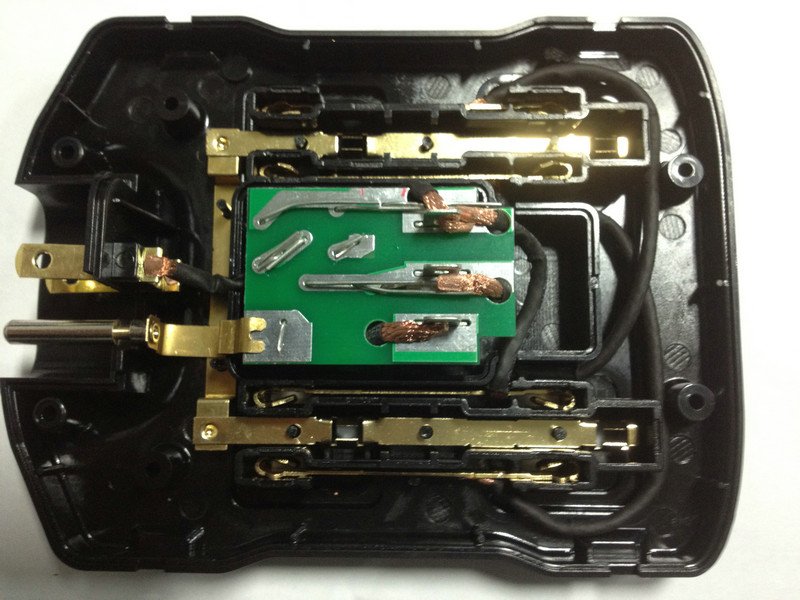
02 - Overview of the wiring harness assembly
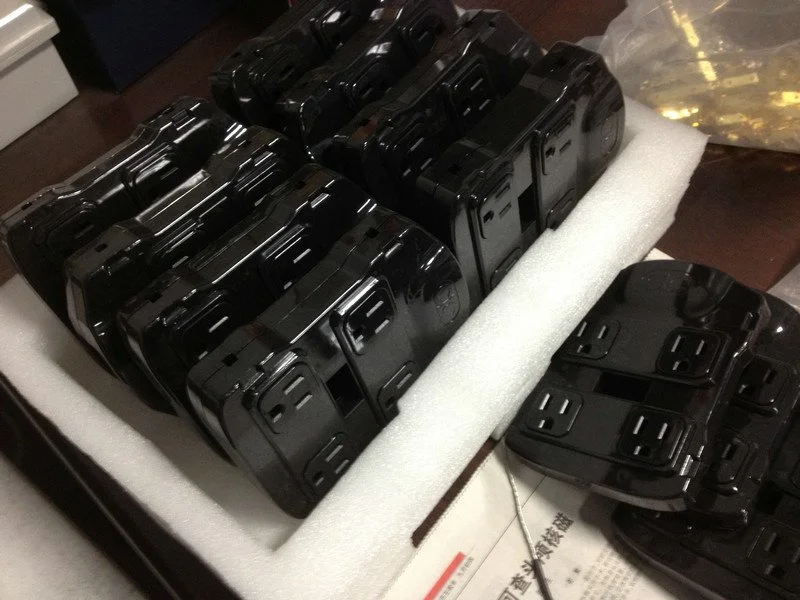
03 - Multiple samples sent to UL’s China lab for extensive testing
PHASE 05
FINAL DESIGN
IN-PRODUCTION
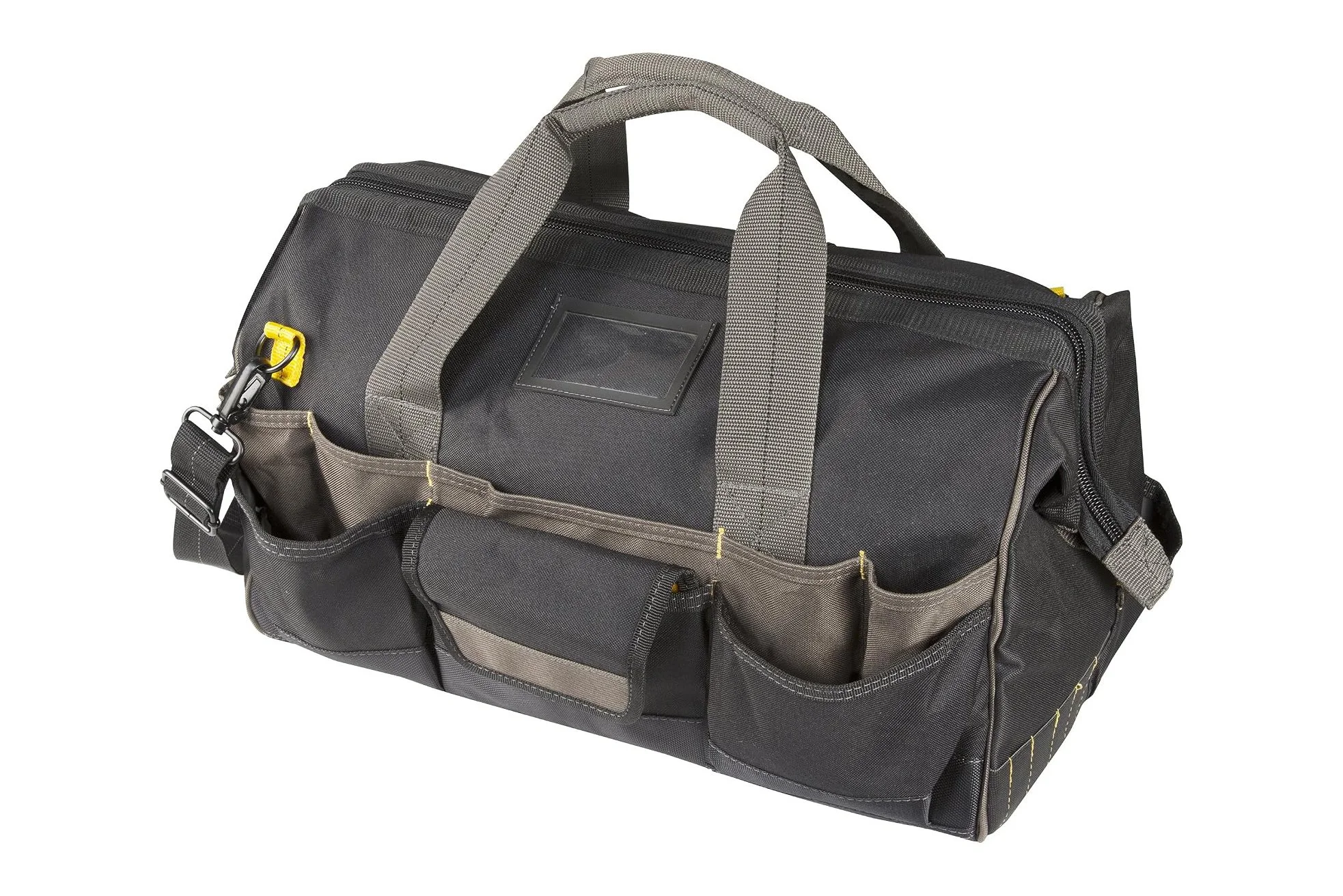
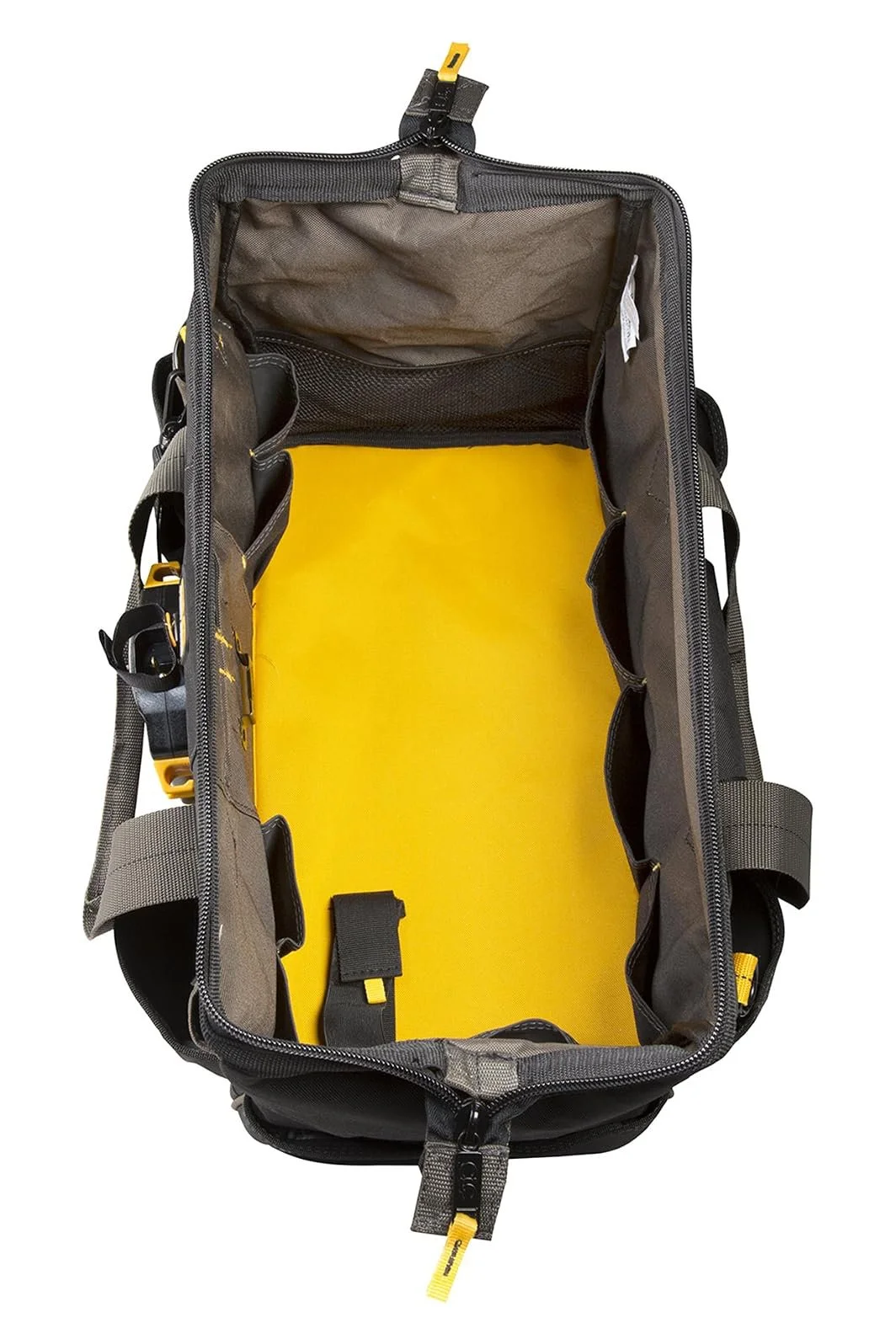
The P235 shipped as a standard 18 inch Tech Gear bag with a four-outlet surge protector that clips onto its face and doubles as a standalone jobsite power strip when pulled off. A Notice of Allowance for the mounting system was issued by UL on October 30, 2013.